

Snake plants are often labeled “low maintenance,” but that doesn’t mean they don’t benefit from strategic care. If you want stronger leaves, faster rhizome development, and a fuller structure, learning how to trim snake plants properly is essential. Pruning is not just cosmetic — it directly influences energy distribution, root health, and future growth cycles.
This updated guide goes beyond basic cutting steps and complements a complete snake plant care guide approach for better long-term results. It explains the science behind trimming, when to prune for maximum growth response, how to avoid common mistakes, and how to combine pruning with repotting and propagation. Whether you are a beginner plant parent or refining your indoor gardening skills, this article provides clear, research-backed, and practical guidance aligned with modern plant care standards.
Understanding Snake Plant Growth Before You Trim
The snake plant, scientifically known as Dracaena trifasciata, grows from underground rhizomes. These rhizomes store nutrients and produce new leaves directly from the soil surface. Unlike branching plants, snake plants do not regrow from cut leaf tips. This is a critical distinction because improper cutting can reduce visual appeal without stimulating new growth.
Each healthy leaf contributes to photosynthesis, supplying energy to the rhizomes. When older or damaged leaves remain attached, they continue consuming resources without contributing efficiently to growth. Strategic trimming removes these energy-draining leaves, allowing the plant to redirect stored carbohydrates toward new shoot development.
Understanding this biological structure ensures that pruning becomes a growth-boosting strategy rather than a random aesthetic adjustment.
Does Trimming a Snake Plant Help It Grow Faster?
Yes, trimming can support faster growth when done intentionally and during the active growing season. Removing damaged, diseased, or excessively tall outer leaves reduces competition for light and nutrients. The plant reallocates energy to healthy rhizomes, which then produce stronger and more upright foliage. This process works even better when combined with proper watering routines explained in how often to water guidelines.
However, trimming does not act like a “growth button.” Over-pruning, cutting during dormancy, or removing too much foliage can temporarily slow development. Growth acceleration happens when pruning is paired with proper light exposure, controlled watering, and well-draining soil conditions. If lighting conditions are not optimal, understanding light requirements becomes essential for maximizing post-pruning growth response.
Best Time to Trim Snake Plant for Maximum Growth
Timing determines recovery speed. Snake plants actively grow in warm months with longer daylight exposure.
The best time to trim is late spring through early summer. During this period, wound healing occurs faster, and new shoots may emerge within weeks. Pruning during fall or winter dormancy can lead to slower recovery because the plant naturally reduces metabolic activity.
Emergency trimming, such as removing rotting or pest-infested leaves, should be done immediately regardless of season. Health always takes priority over timing.
Signs Your Snake Plant Needs Trimming
Not every snake plant requires routine pruning. Instead, observe clear indicators before cutting.
Common signs include yellowing lower leaves, brown mushy bases, cracked or bent foliage, overcrowded structure, or excessively tall outer leaves shading the center. Leaves that flop outward or lean heavily may also signal the need for selective removal.
If your plant appears upright, balanced, and healthy, trimming may not be necessary. Pruning should solve a problem, not create one.
Tools and Preparation for Safe Pruning
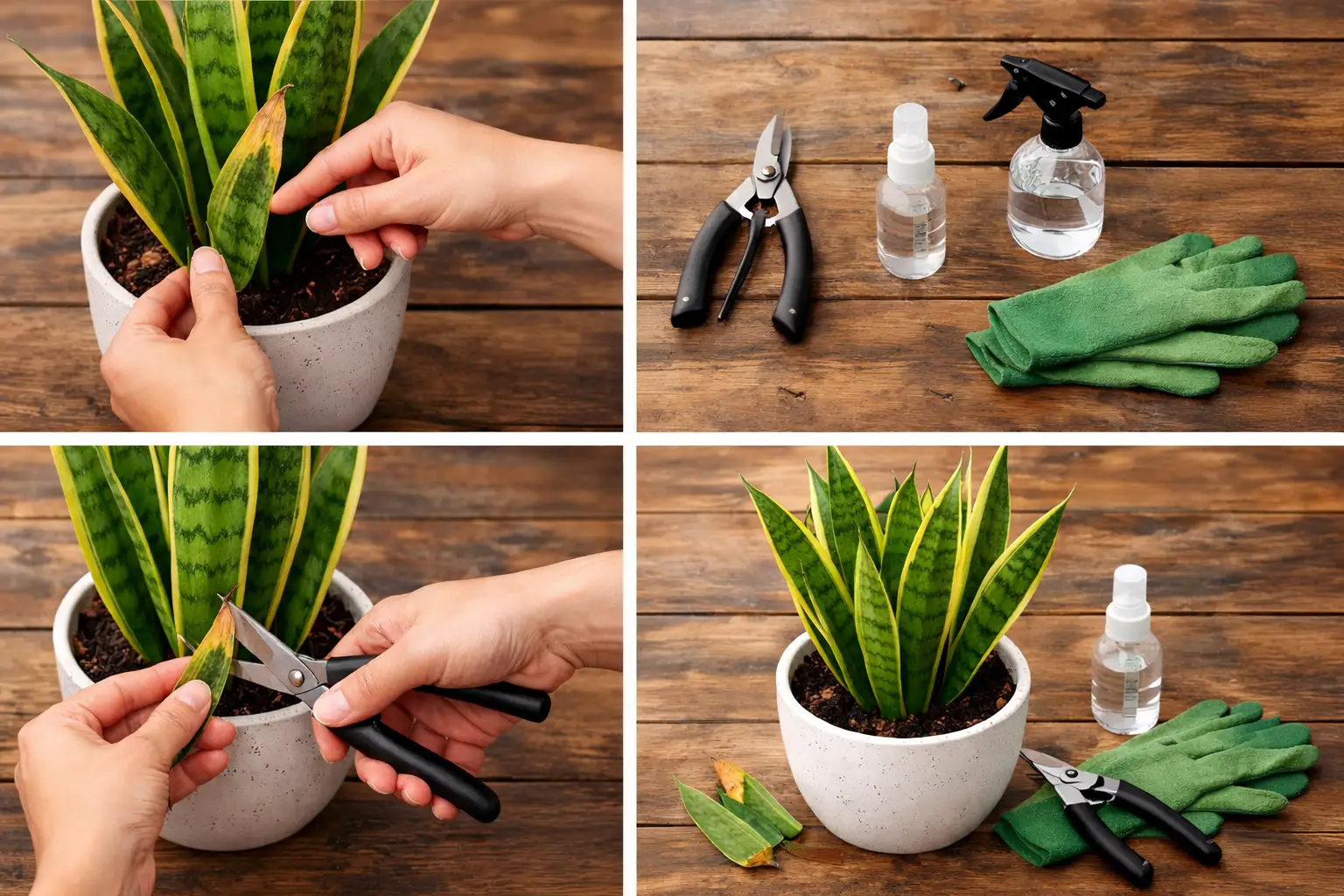
Proper tools ensure clean cuts and prevent infection. Use sharp pruning shears or scissors, sterilized with rubbing alcohol before and after trimming. Clean blades minimize tissue damage and reduce fungal risk.
Wearing gloves is advisable, as snake plant sap can irritate sensitive skin. Always prepare your workspace so you can inspect the plant thoroughly before making any cuts. Preparation protects both the plant and the gardener.
How to Trim Snake Plant (Step-by-Step Growth Method)
Begin by examining the outermost leaves. These are typically older and less efficient. Identify leaves that are yellowing, damaged, or disrupting structural symmetry. Avoid cutting fresh inner growth unless necessary, as these leaves contribute most actively to energy production.
Step 2: Cut at the Soil Line
Using sterilized shears, cut the selected leaf as close to the soil surface as possible. A straight, clean cut reduces exposed tissue and accelerates healing. Do not cut halfway unless removing a small brown tip. Partial cuts can cause additional browning.
Step 3: Remove Moderately
Limit removal to 25–30% of total foliage at one time. Removing excessive leaves reduces photosynthetic capacity and stresses the rhizome system. Moderation ensures that enough healthy leaves remain to fuel recovery.
Step 4: Trimming Brown Tips Correctly
If only the tips are brown, trim along the natural leaf shape rather than cutting straight across. Removing minimal tissue maintains aesthetic appeal while preserving functionality.
Aftercare Strategy to Accelerate Recovery
Post-pruning care determines whether trimming leads to faster growth or temporary stress.
Delay Watering
Wait three to five days before watering. Fresh cuts exposed to excessive moisture increase the risk of rot. Snake plants prefer dry conditions during healing, and following the correct watering amount can prevent further stress on the plant.
Provide Bright Indirect Light
Place the plant near an east- or south-facing window with filtered light. Adequate light stimulates photosynthesis and speeds tissue repair.
Avoid Immediate Fertilization
Allow two to three weeks before feeding. Fertilizing too soon may overstimulate roots before wounds heal.
Maintain Ideal Temperature
Snake plants grow best between 70–85°F (21–29°C). Stable warmth supports metabolic recovery.
How Long Does It Take to Recover?
Most healthy snake plants recover within two to four weeks when trimmed during active growth. New shoots may appear within four to eight weeks depending on light exposure and root health.
Delayed growth often indicates underlying issues such as overwatering, compacted soil, or insufficient light. Address environmental factors before assuming pruning failure.
Combining Pruning with Repotting for Faster Growth
Snake plants prefer slightly tight containers, as mild root crowding stimulates rhizome expansion. However, extreme root binding can limit nutrient absorption.
Signs it’s time to report include roots circling the pot, soil draining too quickly, or the plant becoming unstable. Repot during spring, using a container only one to two inches wider than the previous pot. Combine repotting with selective pruning of older leaves to rejuvenate the plant.
This combination often results in accelerated shoot production within the following growth cycle. In many real cases, pairing pruning with propagation techniques like those shared in snake plant propagation methods can further enhance plant growth and multiply healthy plants efficiently.
Using Pruning for Propagation
Trimming offers an opportunity to propagate new plants.
Water Propagation
Place a healthy leaf cutting in clean water, ensuring the base remains submerged. Change water weekly. Roots typically develop within four to six weeks.
Soil Propagation
Allow the cut end to be callous for 24 hours before placing it in well-draining soil. Water lightly and maintain bright indirect light. Roots and new shoots may appear within several weeks.
Variegated snake plants may lose their yellow margins when propagated from leaf cuttings. Division is recommended for maintaining variegation.
Troubleshooting Problems After Trimming
Drooping Leaves
Drooping after pruning often relates to overwatering or insufficient light rather than trimming itself. Adjust watering frequency and improve lighting conditions.
No New Growth After Several Weeks
Check soil drainage and root condition. Compacted soil or poor light can suppress rhizome activity.
Yellowing Leaves Post-Pruning
This may result from watering too soon or nutrient imbalance. Ensure soil dries between watering sessions.
Advanced Growth Strategies Most Guides Overlook
Rotating your plant monthly ensures even light exposure and upright development. Slight environmental stress, such as allowing soil to fully dry between watering, can encourage stronger root systems.
Encouraging airflow reduces fungal risk and supports faster wound healing. Balanced light, moderate root tightness, and controlled watering together create ideal growth conditions.
Common Mistakes That Slow Growth
Pruning during winter dormancy, removing excessive foliage, watering immediately after cutting, using dull tools, and cutting healthy central growth are common mistakes.
Intentional trimming enhances growth. Impulsive trimming hinders it.
FAQs
Does trimming snake plants help it grow faster?
Yes, removing old or damaged leaves allows the plant to redirect energy toward rhizome development. When done during active growth, trimming can support stronger and healthier new shoots.
Where do you cut a snake plant?
Always cut at the soil line using sterilized tools. Snake plants do not regrow from cut tips, so removing the entire leaf at the base is most effective.
How often should I trim my snake plant?
Most snake plants only need pruning once a year or when damage appears. Over-pruning can stress the plant and slow its natural growth cycle.
Can I trim a snake plant that is too tall?
Yes, cutting tall outer leaves at the base helps maintain height and balance. Strategic trimming improves structure without harming the plant.
Why is my snake plant drooping after pruning?
Drooping usually results from watering imbalance or insufficient light. Ensure proper drainage and bright indirect light to restore upright growth.
Conclusion
Learning how to trim snake plant correctly is about understanding growth biology, timing, and recovery strategy. Pruning is not simply about appearance; it is a growth management technique that influences rhizome health, energy distribution, and structural strength.
When performed during the active season, combined with proper aftercare, and supported by adequate light and drainage, trimming can encourage fuller, faster, and healthier growth. Avoid aggressive cutting, focus on moderation, and monitor environmental conditions closely.
Snake plants are resilient by nature, but intentional care transforms them from surviving to thriving. With strategic pruning and consistent maintenance, your snake plant can remain upright, vibrant, and productive for years to come.