

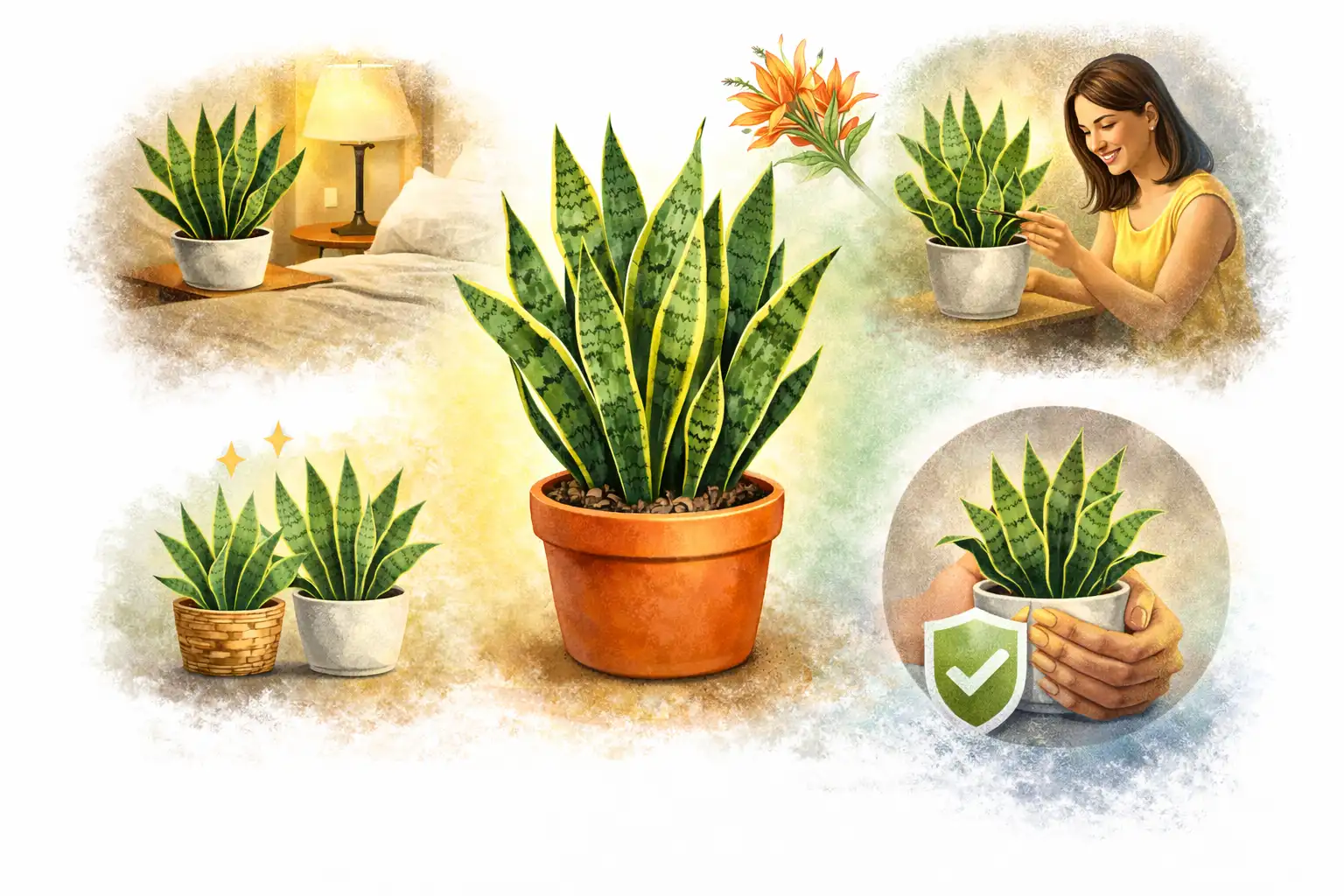
If you’re asking what is a snake plant, it’s a hardy, low-maintenance houseplant with tall, upright leaves that resemble swords. It thrives in a variety of conditions, requires minimal care, and is widely used for home décor and indoor greenery.
Snake plants are among the most popular indoor plants in the United States because they combine beauty, resilience, and practicality. Whether you’re new to houseplants or looking to expand your collection, understanding snake plant information can help you grow and care for it successfully.
What Is a Snake Plant?
A snake plant, scientifically known as Dracaena trifasciata, is a perennial succulent native to West Africa. It was previously classified under the genus Sansevieria, which is why you may still hear both names used interchangeably.
The snake plant description is easy to recognize. It features long, upright leaves with green patterns, often edged with yellow or silver. These leaves grow vertically, making the plant ideal for compact indoor spaces.
From experience, one of the reasons this plant is so popular is its ability to survive neglect. Even if you forget to water it for weeks, it often continues to thrive, making it perfect for busy lifestyles.
Snake Plant Description: Key Characteristics
Understanding the physical features helps you identify and care for snake plants properly.
Appearance
Snake plants have stiff, sword-like leaves that grow upright. The leaves can range from a few inches to several feet tall depending on the variety.
Growth Pattern
They grow in clusters from underground stems called rhizomes. Over time, they spread and produce new shoots, often called “pups.”
Color & Variegation
Most varieties display dark green leaves with lighter horizontal stripes. Some have yellow edges or silvery tones.
Size Range
Indoor snake plants typically grow between 1 to 4 feet tall, though some varieties can grow much larger in ideal conditions.
What Are Snake Plants Used For?

Snake plants are not just decorative—they serve multiple practical purposes in homes and offices.
Home Decoration
Their modern, architectural look makes them a favorite for interior design. They fit well in minimalist and contemporary spaces.
Low-Maintenance Gardening
Because they require little attention, they are ideal for beginners or people with busy schedules.
Indoor Air Support
Snake plants are often associated with improving indoor air quality. While the effect is modest in real homes, they still contribute to a healthier indoor environment.
Benefits of Snake Plants
The popularity of snake plants is largely due to their wide range of benefits.
1. Easy to Care For
Snake plants require minimal watering and can tolerate low light. This makes them one of the easiest houseplants to maintain.
2. Adaptable to Different Conditions
They can grow in bright light, partial shade, or even low-light environments. This flexibility is rare among indoor plants.
3. Improves Indoor Environment
Snake plants release oxygen and help maintain indoor humidity levels. From experience, adding greenery can make a space feel fresher and more comfortable.
4. Aesthetic Appeal
Their tall, structured leaves add height and visual interest to any room.
5. Long Lifespan
With proper care, snake plants can live for many years, making them a long-term investment.
How to Care for a Snake Plant (Step-by-Step Guide)
Proper care ensures your plant not only survives but thrives.
Step 1: Choose the Right Light
Snake plants prefer bright, indirect sunlight. However, they can tolerate low light conditions.
Step 2: Water Correctly
Allow the soil to dry completely between watering. Overwatering is the most common mistake.
Step 3: Use Well-Draining Soil
A cactus or succulent mix works best. Good drainage prevents root rot.
Step 4: Maintain Ideal Temperature
Keep the plant in temperatures between 60°F and 85°F. Avoid cold drafts.
Step 5: Fertilize Occasionally
Feed lightly during spring and summer using a balanced fertilizer.
Step 6: Repot When Needed
Repot every 2–3 years or when roots outgrow the pot.
Best Practices for Healthy Growth
To take your plant care to the next level, follow these expert strategies.
Provide Consistent Lighting
While snake plants tolerate low light, they grow faster and look healthier in bright indirect light.
Rotate the Plant
Turning the pot occasionally ensures even growth and prevents leaning.
Clean the Leaves
Dust can block light. Wipe leaves gently with a damp cloth to keep them clean.
Avoid Overcrowding
Give roots enough space to grow by repotting when necessary.
Common Problems and How to Fix Them
Even though snake plants are tough, issues can still occur.
Yellow Leaves
Cause: Overwatering
Fix: Reduce watering and check soil drainage
Root Rot
Cause: Excess moisture
Fix: Remove affected roots and repot in fresh soil
Drooping Leaves
Cause: Poor lighting or watering issues
Fix: Adjust light exposure and watering routine
Pests (Rare)
Cause: Infestation from nearby plants
Fix: Use neem oil or insecticidal soap
Common Mistakes to Avoid
Avoiding these mistakes will significantly improve plant health.
- Overwatering the plant
- Using heavy, poorly draining soil
- Placing in extreme direct sunlight
- Ignoring signs of root rot
- Repotting too frequently
From real experience, overwatering is responsible for most snake plant failures. Less is often more with this plant.
Types of Snake Plants
There are many varieties, each with unique features.
Laurentii
Known for its yellow-edged leaves and classic appearance.
Cylindrical Snake Plant
Features round, tubular leaves for a modern look.
Bird’s Nest (Hahnii)
A compact variety ideal for small spaces.
Moonshine
Has silvery-green leaves with a soft, elegant tone.
Each type shares similar care requirements, making it easy to explore different varieties.
Snake Plant Meaning & Symbolism
Beyond its physical beauty, the snake plant carries cultural and symbolic meanings.
Symbol of Protection
In many cultures, it is believed to protect against negative energy.
Representation of Strength
Its ability to survive harsh conditions symbolizes resilience and endurance.
Feng Shui Significance
Snake plants are often associated with good luck, prosperity, and positive energy.
Gift Meaning
Giving a snake plant is seen as a wish for growth, success, and well-being.
While these meanings are not scientifically proven, they add emotional and cultural value to the plant.
Is a Snake Plant Safe?
Snake plants are generally safe to keep indoors but require some precautions.
Toxicity
They contain compounds that can be mildly toxic if ingested by pets or humans.
Safety Tips
- Keep out of reach of pets and children
- Avoid ingestion
- Wash hands after handling if sensitive
How Snake Plants Work (Scientific Insight)
Snake plants use a unique process called CAM photosynthesis. This allows them to absorb carbon dioxide at night and release oxygen.
This adaptation helps them conserve water, making them highly drought-resistant. It’s one of the reasons they thrive indoors with minimal care.
Quick Checklist for Snake Plant Care
- Place in bright, indirect light
- Water only when soil is dry
- Use well-draining soil
- Avoid overwatering
- Maintain warm temperatures
- Clean leaves regularly
FAQs
1. What is a snake plant and why is it popular?
A snake plant is a hardy indoor plant known for its upright leaves and low maintenance needs. It’s popular because it survives in various conditions and requires minimal care.
2. How often should I water a snake plant?
Water only when the soil is completely dry. This usually means every 2–4 weeks depending on the environment and season.
3. Can snake plants grow in low light?
Yes, snake plants can survive in low light conditions. However, they grow faster and look healthier in bright, indirect light.
4. Are snake plants good for bedrooms?
Yes, they are often placed in bedrooms due to their oxygen release at night. They also add a calming, natural touch to the space.
5. Why are my snake plant leaves turning yellow?
Yellow leaves are usually a sign of overwatering. Reduce watering and ensure the soil drains properly to prevent root issues.
Conclusion
Understanding what is a snake plant helps you appreciate why it remains one of the most popular houseplants today. With its striking appearance, low-maintenance nature, and cultural significance, it offers both practical and aesthetic value.
Whether you’re exploring snake plant information for the first time or looking to improve your care routine, this plant is an excellent choice for any home. With proper care and attention, your snake plant can thrive for years, bringing beauty and simplicity into your space.