

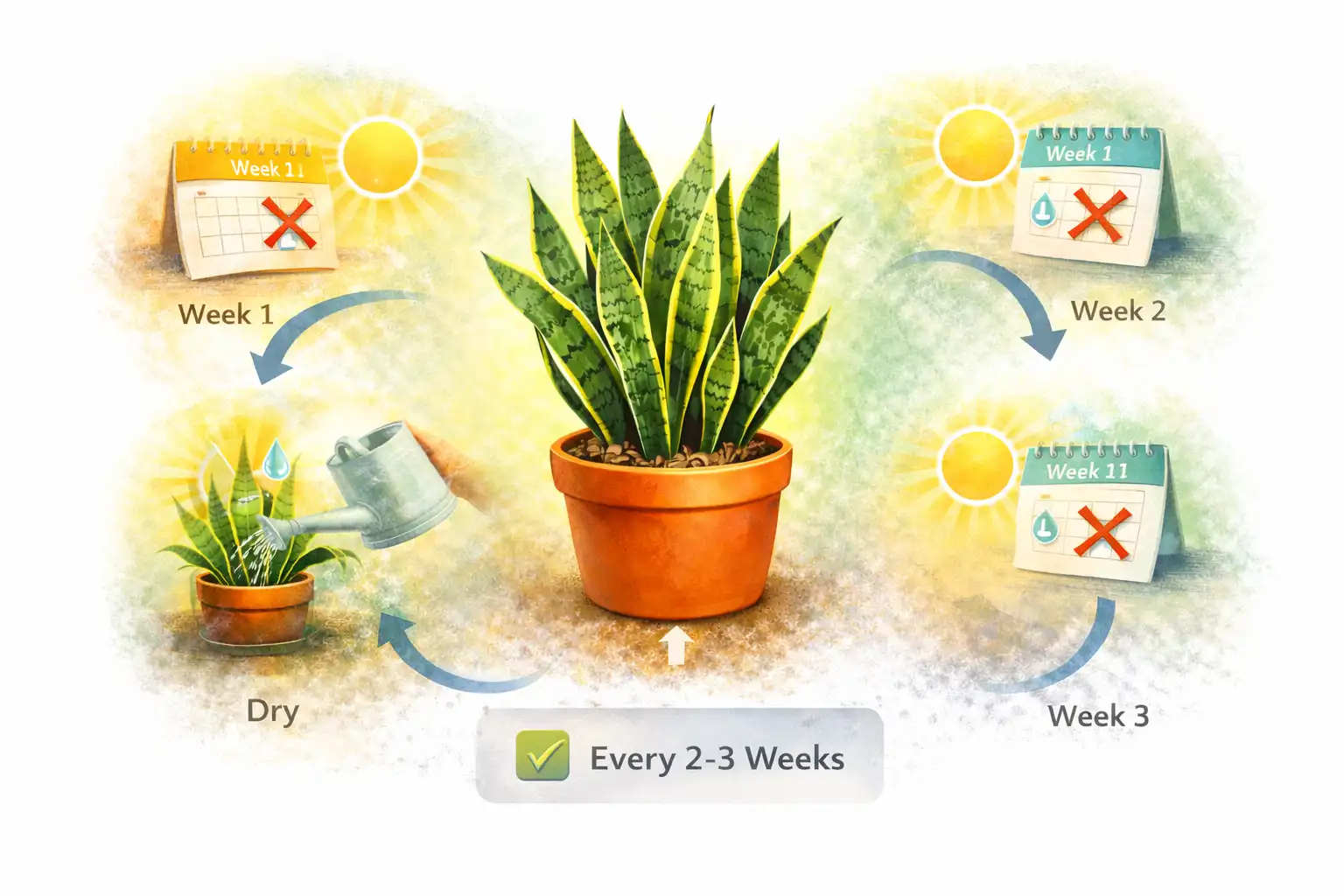
Water your snake plant only when the soil is completely dry, typically every 2–3 weeks in spring/summer and 3–5 weeks in fall/winter. Always adjust based on light, temperature, and humidity—snake plants prefer underwatering over overwatering.
Introduction
Snake plants are among the easiest houseplants to care for, but a simple mistake like overwatering can quickly damage them. If you’ve ever wondered how often to water a snake plant, you’re not alone. It’s a common question asked by both novice and experienced plant owners alike.
The truth is, snake plants don’t follow a strict watering schedule. Their needs depend on the environment, light, soil, and even the pot you use. Understanding these factors, along with a proper snake plant care guide, helps you avoid root rot and keeps your plant thriving for years.
From experience, most snake plant issues I’ve seen are caused not by neglect—but by giving them too much care, especially water. Let’s break down everything you need to know.
Understanding Snake Plant Watering Needs
Snake plants are technically succulents, meaning they store water in their thick leaves. This makes them highly drought-tolerant and able to survive long periods without watering, which is one of the key snake plant benefits many plant owners appreciate However, that doesn’t mean they don’t need water at all.
Unlike tropical plants, snake plants prefer their soil to dry out completely between watering sessions. Their roots are sensitive to constant moisture, which can quickly lead to rot. This is why proper watering is less about frequency and more about timing.
In real cases, people who water on a fixed schedule often overwater their plants. The better approach is to observe the plant and soil condition before deciding when to water.
How Often to Water Snake Plant (Complete Guide)
General Watering Frequency
The most reliable answer to how often you should water snake plants is: only when the soil is fully dry. For most indoor environments in the USA, this translates to:
- Spring/Summer: every 2–3 weeks
- Fall/Winter: every 3–5 weeks
This range varies depending on environmental conditions. A plant in bright light may need water more often than one in a darker corner, which is why understanding light requirements is essential.
Seasonal Differences
During warmer months, snake plants grow actively and use more water. In winter, growth slows down, and the plant requires significantly less moisture. This is why watering frequency must be reduced during colder months.
Ignoring seasonal changes is one of the most common mistakes. Many people continue summer watering habits in winter, which leads to overwatering problems.
Indoor vs Outdoor Watering

Indoor snake plants typically need less frequent watering because they are protected from direct sun and wind. Outdoor plants, especially in warmer climates, may dry out faster and require more frequent watering.
However, outdoor plants are also exposed to rain, which can increase the risk of overwatering if not monitored carefully.
Key Factors That Affect Snake Plant Watering
Light Exposure
Light plays the biggest role in determining how often do snake plants need to be watered. Plants in bright indirect light use more water and dry out faster.
In low-light environments, soil retains moisture longer, meaning watering should be less frequent. Overwatering in low light is one of the fastest ways to damage a snake plant.
Temperature and Humidity
Higher temperatures increase evaporation, causing soil to dry faster. Similarly, low humidity environments lead to quicker moisture loss.
In cooler or humid environments, water stays in the soil longer. This means watering intervals should be extended to prevent soggy conditions.
Soil Type
Well-draining soil is essential for proper snake plant watering. A cactus or succulent mix allows excess water to escape quickly, reducing the risk of root rot.
If the soil is dense or retains moisture, watering frequency must be reduced. Poor soil drainage is often the hidden reason behind overwatering issues.
Pot Type and Drainage
Terracotta pots absorb moisture and help soil dry faster, while plastic pots retain water longer. Pots without drainage holes are especially risky because they trap water at the bottom.
From experience, switching to a pot with proper drainage can instantly solve many watering problems without changing your routine, especially when dealing with Soil & Repotting concerns.
Step-by-Step Guide to Watering a Snake Plant
Step 1: Check Soil Moisture
Insert your finger about 2 inches into the soil. If it feels completely dry, it’s time to water. If there’s any moisture, wait a few more days.
This simple test is far more reliable than following a fixed schedule.
Step 2: Water Evenly
Pour water directly onto the soil until it drains out of the bottom. Avoid watering the leaves, as trapped moisture can lead to rot.
Make sure the entire root system receives moisture, not just the surface.
Step 3: Drain Excess Water
Always remove excess water from the saucer. Letting the plant sit in water can suffocate roots and lead to root rot.
Proper drainage is just as important as the watering itself.
Step 4: Let Soil Dry Completely
Do not water again until the soil has fully dried out. This cycle mimics the plant’s natural environment and keeps it healthy.
Best Practices for Snake Plant Watering
Use the “Dry Soil Rule”
The golden rule of watering a snake plant is simple: never water unless the soil is completely dry. This prevents most common issues.
Water Less in Winter
Reduce watering significantly during colder months. The plant enters a dormant phase and requires minimal moisture.
Avoid Misting
Snake plants do not need misting. It does not improve humidity and may cause fungal problems if water sits on leaves.
Use Room-Temperature Water
Cold water can shock the roots. Always use water that is at room temperature for best results.
Common Snake Plant Watering Mistakes
Overwatering
This is the number one cause of snake plant death. Too much water leads to root rot, which is often irreversible if not caught early.
Watering on a Schedule
Following a strict schedule without checking soil moisture can lead to overwatering or underwatering. Always adjust based on conditions.
Poor Drainage
Using pots without drainage holes or heavy soil traps water and creates unhealthy conditions for roots.
Ignoring Seasonal Changes
Watering the same way year-round does not work. Adjusting for seasons is essential for long-term plant health.
Signs Your Snake Plant Needs Water
Underwatering Symptoms
If your plant is not getting enough water, you may notice:
- Dry, crispy leaf edges
- Wrinkled or curling leaves
- Soil pulling away from the pot
These signs indicate the plant needs hydration soon.
Overwatering Symptoms
Overwatering shows different warning signs, including:
- Yellowing leaves
- Soft or mushy stems
- Foul-smelling soil
If you notice these, stop watering immediately and check the roots.
Troubleshooting Watering Problems
How to Fix an Overwatered Snake Plant
Remove the plant from its pot and inspect the roots. Trim any mushy or black roots and repot in fresh, well-draining soil.
Allow the plant to dry out before watering again. This can save the plant if caught early.
How to Revive an Underwatered Plant
Water the plant thoroughly and allow excess water to drain. In most cases, the plant will recover quickly once it receives proper hydration.
Consistent care after recovery is key to preventing future issues.
Benefits of Proper Snake Plant Watering
When you understand how often should I water snake plant, you unlock several benefits:
- Strong, upright leaves
- Healthy root system
- Faster growth during active seasons
- Resistance to pests and diseases
Proper watering is the foundation of overall plant health and supports better results when you propagate snake plant successfully.
Quick Watering Checklist
- Check soil dryness before watering
- Water only when soil is fully dry
- Use well-draining soil
- Ensure pot has drainage holes
- Reduce watering in winter
- Avoid misting leaves
- Never let plant sit in water
FAQs
How often should you water snake plant indoors?
Indoor snake plants typically need watering every 2–4 weeks. However, always check soil dryness before watering, as indoor conditions can vary greatly depending on light and temperature.
Can I water my snake plant once a week?
Watering weekly is usually too frequent for snake plants. This can lead to overwatering unless the plant is in very bright light and dries out quickly.
How do I know when to water snake plant?
The best way is to check the soil. If it is completely dry 2 inches deep, it’s time to water. If not, wait a few more days and check again.
Do snake plants need less water in winter?
Yes, snake plants require significantly less water in winter. Their growth slows down, and watering once every 3–5 weeks is usually enough.
What happens if I overwater a snake plant?
Overwatering can cause root rot, yellow leaves, and mushy stems. If not treated early, it can kill the plant, making proper watering essential.
Conclusion
Understanding how often to water snake plant is the key to keeping this low-maintenance plant healthy and thriving. Instead of following a strict schedule, focus on soil dryness, environment, and seasonal changes.
From experience, the best approach is simple: water less, observe more. Snake plants are incredibly forgiving, but they reward careful watering with strong growth and long-lasting beauty.
Master this one aspect of care, and your snake plant will thrive for years with minimal effort.