

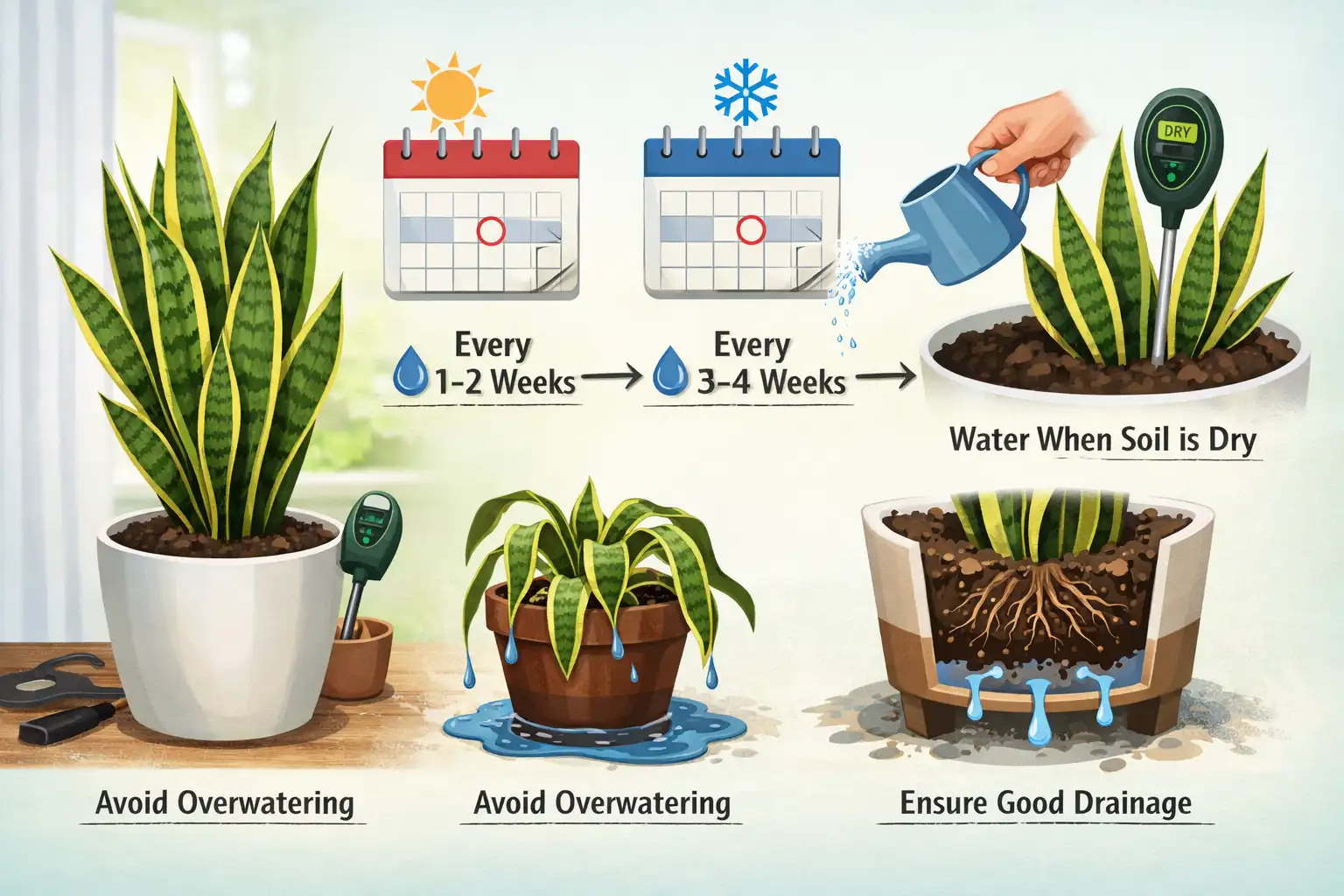
A snake plant needs water only when its soil is completely dry.
In most indoor conditions, this means watering every 2–3 weeks, using just enough water to moisten the soil and allow excess to drain out.
Overwatering is the most common mistake these plants prefer being slightly dry rather than constantly moist.
Introduction
Snake plants are one of the easiest houseplants to care for, yet many people still struggle with how much water does a snake plant need. The confusion often comes from treating them like typical houseplants, when in reality, they behave more like succulents.
These hardy plants store water in their thick leaves, which allows them to survive drought conditions. However, improper watering—especially overwatering—can quickly damage them. Understanding the correct balance is key to keeping your plant healthy and thriving for years.
In this complete guide, you’ll learn everything from beginner basics to advanced watering strategies, including schedules, signs, and expert tips based on real experience.
Understanding Snake Plant Watering Needs
Snake plants (Sansevieria) are drought-tolerant plants that naturally grow in dry environments. This means they don’t require frequent watering and can actually suffer if watered too often.
Unlike many indoor plants, snake plants store moisture in their leaves. This built-in water reserve allows them to go for extended periods without watering. Because of this, their roots are highly sensitive to excess moisture, which can lead to root rot if not managed properly.
From experience, the biggest mistake beginners make is assuming “more care = more water.” In reality, snake plants thrive when you water less and let the soil dry out completely between watering sessions, as explained in this complete care guide.
How Much Water Does a Snake Plant Need?
The Exact Amount of Water to Use
When asking how much water for snake plant, the answer is simple: water thoroughly but infrequently. This means you should water until excess water drains from the bottom of the pot.
The goal is to fully hydrate the roots without leaving the soil soggy. A good rule is to water slowly until you see water coming out of the drainage holes, then stop immediately.
In real cases, small plants may need about half a cup, while larger plants may require 1–2 cups. However, the exact amount depends more on soil dryness than a fixed measurement.
Frequency: How Often Should You Water?
The frequency of snake plant watering depends on environmental conditions, but here’s a general guideline:
- Spring/Summer: every 10–14 days
- Fall/Winter: every 3–4 weeks
- Low light areas: less frequent watering
Always check the soil before watering. If it still feels slightly moist, wait a few more days.
From experience, following a strict calendar is less effective than checking soil dryness. The plant itself tells you when it needs water, and you can follow this watering schedule for better consistency.
Snake Plant Watering Schedule (Beginner-Friendly Guide)
Creating a proper snake plant watering schedule helps beginners avoid common mistakes and maintain consistency.
Weekly Check Routine

Instead of watering on a fixed day, follow a weekly check system:
- Insert your finger 2–3 inches into the soil
- If completely dry → water
- If slightly damp → wait 3–5 days
This method ensures you never overwater your plant.
Seasonal Adjustments
Snake plants behave differently depending on the season. During warmer months, they grow actively and need slightly more water. In colder months, their growth slows down, and water requirements decrease.
In real cases, many plant owners lose their snake plants in winter simply because they continue summer watering habits. Adjusting your schedule seasonally is essential.
Factors That Affect Snake Plants Watering
Light Exposure
Light plays a major role in watering snake plant frequency. Plants in bright light dry out faster and need more frequent watering compared to those in low light.
If your snake plant sits near a sunny window, expect to water it more often than one placed in a shaded corner. Understanding proper light requirements can help you adjust watering correctly.
Temperature and Humidity
Higher temperatures increase evaporation, causing the soil to dry faster. On the other hand, high humidity keeps moisture in the soil longer.
From experience, homes with air conditioning or heating systems can significantly affect how quickly soil dries, so always adjust your watering routine accordingly.
Soil Type
Well-draining soil is critical for snake plants. A cactus or succulent mix is ideal because it allows water to flow through quickly, preventing water buildup.
Dense or compact soil retains moisture longer, increasing the risk of overwatering. If your plant’s soil stays wet for too long, consider repotting it with better drainage.
Pot Type and Drainage
The type of pot you use directly impacts how much to water snake plant.
Terracotta pots absorb moisture and dry out faster, while plastic pots retain water longer. Always use pots with drainage holes to prevent water from sitting at the bottom.
In real cases, switching to a well-draining pot alone can solve many watering issues.
Step-by-Step Guide: How to Water a Snake Plant Properly
Step 1: Check Soil Dryness
Before watering, always ensure the soil is completely dry. This step is crucial and prevents overwatering.
Step 2: Water Evenly
Pour water evenly around the base of the plant, avoiding direct contact with the leaves.
Step 3: Allow Drainage
Make sure excess water drains out completely. Never let the plant sit in standing water.
Step 4: Empty the Saucer
After watering, remove any collected water from the saucer to prevent root rot.
Step 5: Return to Proper Placement
Place the plant back in a well-lit area with indirect sunlight to support healthy growth.
Best Practices for Snake Plant Watering
Use the “Soak and Dry” Method
This method involves soaking the soil thoroughly and then allowing it to dry completely before watering again. It mimics the plant’s natural environment and promotes healthy roots.
Avoid Misting
Snake plants do not benefit from misting. In fact, excess moisture on leaves can lead to fungal issues and rot.
Use Room Temperature Water
Cold water can shock the plant’s roots. Always use room temperature or slightly warm water for best results.
Common Snake Plant Watering Mistakes
Overwatering
Overwatering is the number one cause of snake plant death. It leads to root rot, yellow leaves, and mushy stems.
Watering on a Schedule Without Checking Soil
Blindly following a schedule without checking soil moisture often results in overwatering or underwatering.
Using Pots Without Drainage
Pots without drainage holes trap water, creating a high risk of root rot.
Watering Leaves Instead of Soil
Water sitting on leaves can cause rot and disease. Always focus on the soil.
Troubleshooting Snake Plant Watering Problems
Signs of Overwatering
Overwatered snake plants often show yellowing leaves, soft texture, and a foul smell from the soil. The roots may appear dark and mushy.
To fix this, stop watering immediately, remove the plant from the soil, trim damaged roots, and repot in fresh, dry soil.
Signs of Underwatering
Underwatered plants develop dry, crispy leaf edges and may start curling inward. The soil becomes extremely dry and compact.
To fix this, water the plant thoroughly and monitor it closely for recovery.
Root Rot Issues
Root rot is caused by prolonged exposure to moisture. It is one of the most serious problems and can kill the plant if not addressed early.
From experience, early detection is key. If you notice a musty smell or soft roots, act immediately to save the plant.
Benefits of Proper Snake Plant Watering
Proper watering doesn’t just keep your plant alive—it helps it thrive. A well-watered snake plant grows stronger, develops vibrant leaves, and resists pests and diseases more effectively.
Balanced watering also improves root health, which directly impacts the plant’s ability to absorb nutrients. In real cases, plants with proper watering routines grow faster and look significantly healthier, contributing to overall plant benefits indoors.
Quick Checklist for Snake Plant Watering
- Check soil dryness before watering
- Water only when soil is completely dry
- Use well-draining soil
- Always use pots with drainage holes
- Avoid overwatering at all costs
- Reduce watering in winter
- Keep water off the leaves
FAQs
How much water do snake plants need per week?
Snake plants do not need weekly watering. In most cases, watering every 2–3 weeks is enough, depending on soil dryness and environmental conditions.
Can I water my snake plant every week?
Watering every week is usually too frequent. Always check if the soil is fully dry before watering to avoid overwatering issues.
How do I know if my snake plant needs water?
Check the soil by inserting your finger a few inches deep. If it feels completely dry, it’s time to water your plant.
Is it better to overwater or underwater a snake plant?
It’s better to underwater slightly than overwater. Snake plants can tolerate dryness, but excess moisture can cause root rot quickly.
Should I mist my snake plant?
No, misting is not recommended. Snake plants prefer dry conditions, and excess moisture on leaves can lead to problems.
Conclusion
Understanding how much water does a snake plant need is the key to keeping this low-maintenance plant healthy and thriving. The golden rule is simple: water only when the soil is completely dry and avoid overwatering at all costs.
By following a proper snake plant watering schedule, adjusting for environmental factors, and using the soak-and-dry method, you can ensure your plant grows strong and vibrant. Remember, less water is often better than more when it comes to snake plants.
Master this one habit, and your snake plant will reward you with years of effortless beauty.