

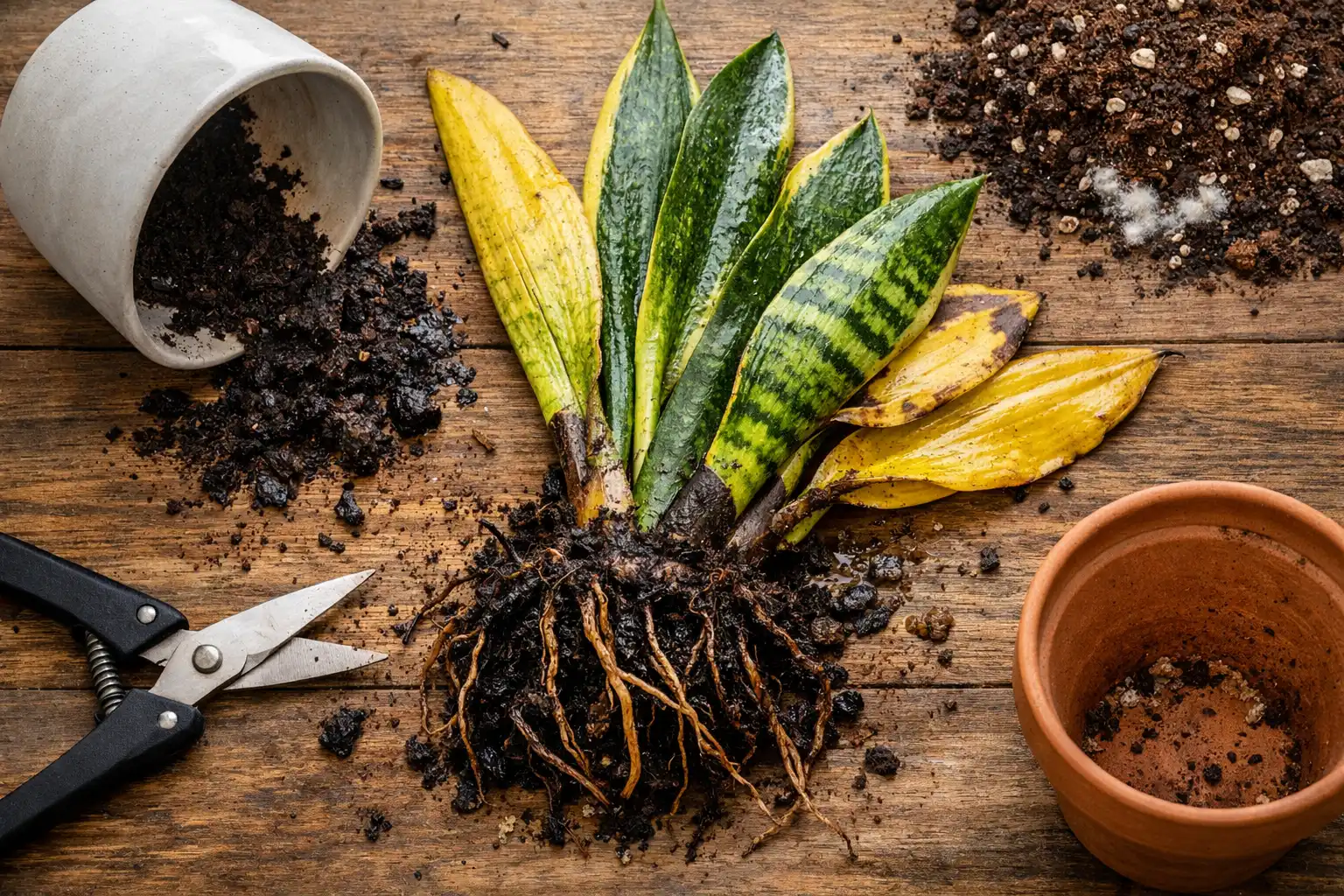
An overwatered snake plant usually shows yellow, mushy, or drooping leaves, along with soggy soil and possible root rot.
To fix it quickly, stop watering, let the soil dry, trim damaged roots, and repot in well draining soil.
Introduction
Snake plants are known as one of the easiest houseplants to care for, especially for beginners. However, even these hardy plants can struggle when given too much water. In fact, overwatering is the number one reason snake plants decline indoors, even when following a general snake plant care guide.
If you are noticing changes in your plant, understanding the signs of overwatered snake plant issues early can save it. This guide will walk you through everything from basic identification to advanced recovery methods. Whether you are a beginner or an experienced plant owner, you will learn exactly how to fix and prevent overwatering problems.
What Does an Overwatered Snake Plant Look Like
An overwatered snake plant shows clear physical and environmental symptoms that are easy to identify once you know what to look for. These signs usually appear in the leaves first, then progress to the roots and soil.
When excess water sits in the soil, it blocks oxygen flow to the roots. This causes root damage, which then affects the plant’s ability to absorb nutrients. As a result, the plant starts to weaken and display visible distress signals.
Key Visual Signs
The most noticeable changes occur in the leaves and base of the plant. These symptoms develop gradually but can worsen quickly if ignored.
Yellow leaves are one of the earliest signs. The leaves may also feel soft instead of firm. In many cases, the plant begins to droop or collapse because the roots are no longer functioning properly.
Soil and Root Clues
The soil condition often reveals the real problem. Overwatered soil stays wet for too long and may develop a foul smell.
If you remove the plant from the pot, you may notice dark, mushy roots instead of firm white ones. This indicates root rot, which is the most serious consequence of overwatering and may require proper root rot treatment to save the plant.
Signs of Overwatered Snake Plant
Recognizing the signs of overwatered snake plant issues early can help you take action before permanent damage occurs. These symptoms can vary depending on how severe the overwatering is.
Yellowing Leaves
Yellow leaves are often the first warning sign. This happens because excess water washes away nutrients and damages the roots.
From experience, many plant owners confuse yellowing with underwatering. However, if the soil is wet and leaves are turning yellow, overwatering is the likely cause.
Mushy or Soft Leaves
Healthy snake plant leaves are upright and firm. When overwatered, they become soft, squishy, and weak.
This happens because the plant cells absorb too much water, causing them to break down. In advanced cases, the base of the leaf may feel slimy.
Drooping or Falling Leaves

Drooping leaves indicate that the root system is no longer supporting the plant properly. The leaves may bend or collapse completely.
In real cases, this is often mistaken for lack of water. Always check soil moisture before making assumptions.
Root Rot and Bad Smell
Root rot is the most dangerous stage of overwatering. It is caused by fungi that thrive in wet conditions.
You may notice a foul smell coming from the soil. The roots will appear brown, black, and mushy instead of healthy and white.
Mold or Fungus on Soil
White or green mold on the soil surface is another clear indicator. This happens when the soil remains damp for too long.
Mold not only harms the plant but can also attract pests like fungus gnats, making the situation worse.
Overwatered vs Underwatered Snake Plant
Understanding the difference between underwatered and overwatered snake plant symptoms is crucial. Many signs can look similar, but the causes are completely different.
An overwatered plant has soft, yellow, and mushy leaves with wet soil. In contrast, an underwatered plant has dry, wrinkled, and crispy leaves with dry soil.
From experience, checking the soil is the easiest way to tell the difference. Wet soil means overwatering, while dry soil indicates underwatering, and understanding how often to water snake plant can help prevent this confusion.
Causes of Snake Plant Overwatered Problems
Knowing why overwatering happens helps you prevent it in the future. Most issues come from care mistakes rather than the plant itself.
Watering Too Frequently
Snake plants store water in their leaves, so they do not need frequent watering. Giving water too often keeps the soil constantly wet.
This prevents the roots from breathing and leads to gradual damage.
Poor Drainage
Using pots without drainage holes is a common mistake. Without proper drainage, excess water cannot escape.
Even high quality soil will fail if water has nowhere to go.
Wrong Soil Type
Regular potting soil holds too much moisture. Snake plants need well draining soil similar to cactus or succulent mixes.
Heavy soil traps water and increases the risk of root rot.
Low Light Conditions
Plants in low light use less water. If you water them the same as plants in bright light, the soil will stay wet longer.
This imbalance often leads to overwatering without the owner realizing it.
How to Fix an Overwatered Snake Plant Fast
If your snake plant is overwatered, acting quickly can save it. The recovery process depends on how severe the damage is.
Step 1 Stop Watering Immediately
The first and most important step is to stop watering. Allow the soil to dry completely before doing anything else.
This prevents further damage and gives the roots a chance to recover.
Step 2 Remove the Plant from the Pot
Gently take the plant out of its pot and inspect the roots. This step is crucial for identifying root rot.
Be careful not to damage the healthy roots during removal.
Step 3 Trim Damaged Roots
Use clean scissors to cut away any black, mushy, or rotten roots. Only keep firm, healthy roots.
From experience, removing all infected areas is key to stopping the spread of rot.
Step 4 Let the Plant Dry
Allow the plant to air dry for one to two days. This helps eliminate excess moisture from the roots.
Place it in a shaded, well ventilated area during this time.
Step 5 Repot in Fresh Soil
Use fresh, well draining soil designed for succulents. Make sure the pot has drainage holes.
Report the plant at the same depth as before and avoid watering immediately.
Step 6 Resume Proper Watering
After a few days, start watering lightly. Only water when the soil is completely dry.
This step ensures long term recovery and prevents the issue from returning.
Best Practices to Prevent Overwatering
Prevention is always easier than recovery. Following a few simple strategies can keep your snake plant healthy.
Check Soil Before Watering
Always check the soil moisture before watering. Insert your finger a couple of inches into the soil.
If it feels dry, it is safe to water. If not, wait a few more days.
Use Proper Soil Mix
A well draining soil mix is essential. Combine potting soil with sand or perlite for better aeration.
This allows excess water to drain quickly.
Choose the Right Pot
Use pots with drainage holes to prevent water buildup. Terracotta pots are especially helpful because they allow moisture to evaporate.
This reduces the risk of overwatering significantly.
Adjust Watering by Season
Snake plants need less water in winter and more in summer. Adjust your watering schedule accordingly.
Ignoring seasonal changes is a common mistake among beginners.
Common Mistakes to Avoid
Even experienced plant owners can make mistakes when caring for snake plants. Avoiding these errors can protect your plant from damage.
Watering on a fixed schedule instead of checking the soil can lead to overwatering. Using decorative pots without drainage is another major issue.
Placing the plant in very low light while watering regularly also creates problems. From experience, most overwatering cases come from a combination of these mistakes.
Troubleshooting Severe Cases
Sometimes, the damage is already advanced. In such cases, extra steps may be required to save the plant.
If most of the roots are rotten, you can try propagating healthy leaves. Cut a healthy leaf and grow it in fresh soil using proven snake plant propagation methods.
In real cases, propagation is often the only way to save a severely overwatered snake plant. While it takes time, it can successfully create a new healthy plant.
Benefits of Proper Watering
Maintaining the right watering routine offers several benefits for your snake plant. It promotes strong root development and healthy growth.
Proper watering also prevents diseases like root rot and keeps the leaves firm and upright. A well cared plant can thrive for years with minimal effort.
Quick Checklist
Here is a quick checklist to help you manage your snake plant care effectively:
- Check soil dryness before watering
- Use well draining soil mix
- Ensure pot has drainage holes
- Avoid frequent watering
- Provide bright indirect light
- Inspect roots regularly
- Remove damaged leaves quickly
FAQs
How do I know if my snake plant is overwatered?
An overwatered snake plant usually has yellow, soft, or drooping leaves along with wet soil. You may also notice a bad smell from the roots. Checking soil moisture is the easiest way to confirm the issue.
Can an overwatered snake plant recover?
Yes, it can recover if the damage is caught early. Removing excess moisture and trimming rotten roots can help the plant bounce back. Proper care afterward is essential for full recovery.
How often should I water a snake plant?
Water only when the soil is completely dry. This can be every two to six weeks depending on light and temperature. Always adjust based on your environment rather than a fixed schedule.
What does root rot look like in snake plants?
Root rot appears as black or brown mushy roots with a foul smell. Healthy roots are firm and white. If rot is present, immediate action is required to save the plant.
Should I cut off damaged snake plant leaves?
Yes, removing damaged leaves helps the plant focus on healthy growth. Cut them cleanly at the base using sterilized tools. This also prevents the spread of disease.
Conclusion
An overwatered snake plant is a common problem, but it is also one of the easiest to fix if caught early. By recognizing the signs of overwatered snake plant issues such as yellow leaves, mushy texture, and root rot, you can take quick action to save your plant.
The key is simple. Water less, check soil moisture, and use proper drainage. With the right care routine, your snake plant will not only recover but thrive for years.