

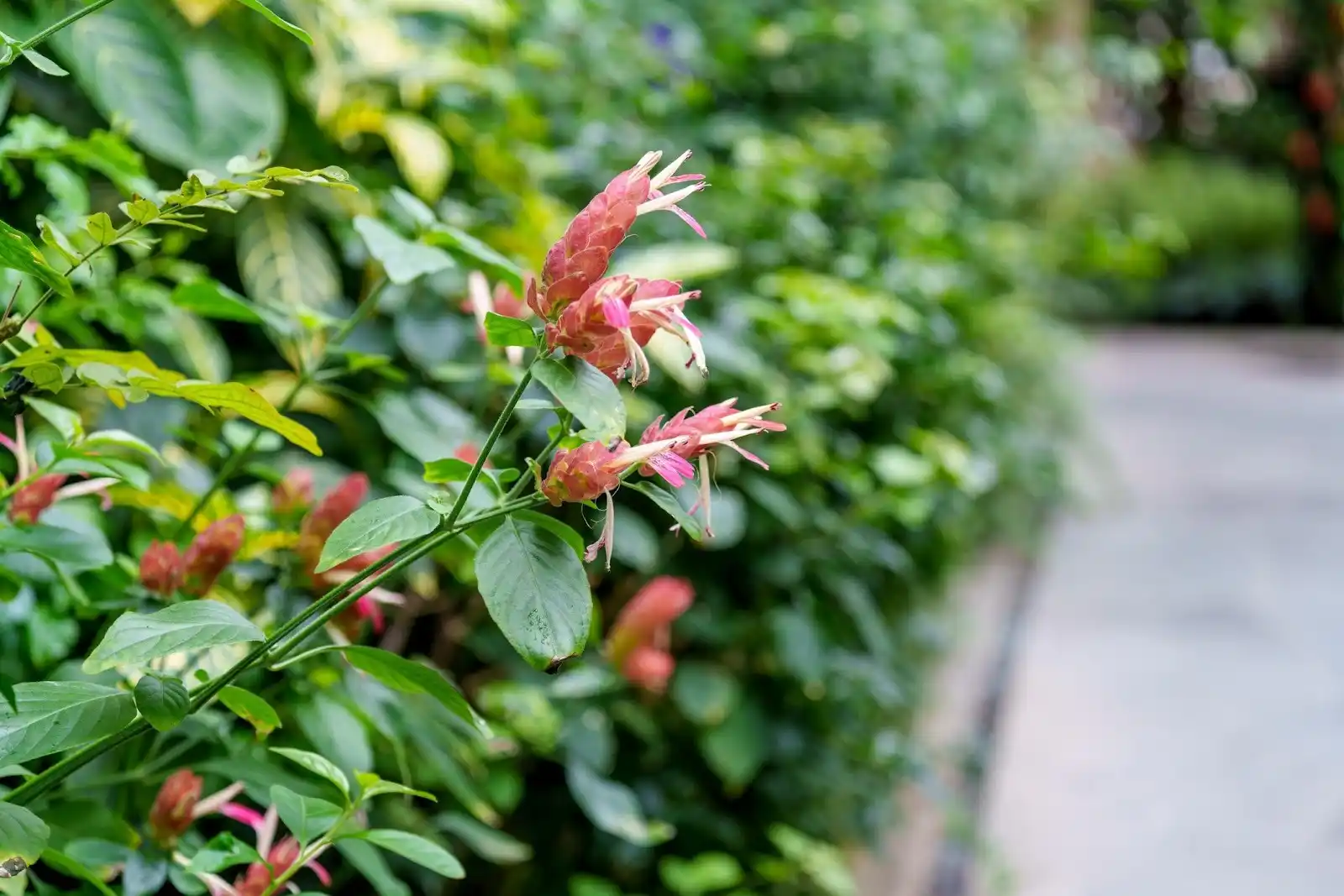
Shrimp plant care involves providing bright indirect light, consistently moist but well drained soil, warm temperatures above 55°F, and regular pruning to encourage continuous blooming. This tropical ornamental shrub thrives indoors and outdoors when humidity, light exposure, and watering are properly balanced.
What Is a Shrimp Plant
The shrimp plant, botanically known as Justicia brandegeeana, is a tropical evergreen shrub recognized for its shrimp shaped bracts that resemble curved shells. These bracts range in color from red and pink to yellow and often surround small white tubular flowers.
Native to Mexico and Central America, this plant thrives in warm climates and has become popular across the United States for landscaping, patios, and indoor decor. It typically grows 3 to 4 feet tall and wide, forming a bushy structure with arching stems.
Shrimp plants are valued for their long blooming season, ease of care, and ability to attract pollinators such as hummingbirds and butterflies.
Shrimp plant
A tropical flowering shrub with shrimp shaped colorful bracts and small white flowers.
Shrimp plant care
A process involving balanced light, moderate watering, warm temperatures, and pruning for optimal growth.
Red shrimp plant
A common variety featuring bright red bracts that resemble shrimp shells.
Shrimp Plant vs Similar Tropical Plants
| Feature | Shrimp Plant | Golden Shrimp Plant | Hibiscus |
| Botanical Name | Justicia brandegeeana | Pachystachys lutea | Hibiscus rosa sinensis |
| Flower Structure | Bracts with small flowers | Upright yellow bracts | Large petals |
| Light Needs | Partial sun | Full to partial sun | Full sun |
| Indoor Suitability | High | Moderate | Limited |
| Maintenance Level | Low to moderate | Moderate | Moderate |
This comparison helps gardeners choose the right plant based on care level and environment.
Why Shrimp Plants Matter
Shrimp plants are more than ornamental additions. They provide long lasting color, improve garden aesthetics, and support pollinators. Their adaptability makes them ideal for both indoor and outdoor environments.
In modern home design, shrimp plants align with biophilic trends by bringing natural color and texture indoors. Their low maintenance nature makes them suitable for beginners while still offering enough flexibility for advanced gardeners.
Ideal Growing Conditions
Light Requirements
Shrimp plants thrive in bright indirect light with access to gentle morning sun. This light balance enhances bract color and promotes continuous flowering.
Too much direct sunlight can cause fading and leaf burn, while low light leads to weak stems and reduced blooms. Indoors, placing the plant near an east facing window provides optimal results.
Soil and Potting Needs
The plant prefers well draining soil that retains moisture without becoming soggy. A loamy mix ensures proper root development.
Recommended soil mix:
- 2 parts potting soil
- 1 part perlite
- 1 part organic compost or bark
Maintaining a pH between 6.0 and 7.0 supports efficient nutrient absorption.
Watering Strategy
Consistent watering frequency is essential for shrimp plant care. The soil should remain slightly moist but never waterlogged.
Best practice:
- Water when the top inch of soil is dry
- Reduce watering during winter
- Ensure proper drainage
Overwatering leads to root rot and yellow leaves, while underwatering causes wilting and leaf drop.
Temperature and Humidity
Shrimp plants require warm temperatures above 55°F and thrive in humid environments. They are sensitive to frost and should be protected during cold conditions.
To improve humidity indoors:
- Use a humidifier
- Mist occasionally
- Place on pebble trays
These methods replicate tropical conditions and support healthy growth.
Step by Step Growing Guide
Step 1 Select the Right Location
Choose a location with bright indirect light and protection from harsh afternoon sun. Outdoor placement should include partial shade in warmer climates.
Step 2 Prepare Soil Properly
Use well draining soil enriched with compost to ensure nutrients and proper moisture balance.
Step 3 Planting
- Dig a hole twice the root ball size
- Place plant at ground level
- Fill soil gently and water thoroughly
Spacing should be around 2 to 3 feet for airflow.
Step 4 Establish Water Routine
Maintain consistent moisture during early growth stages. Once established, the plant becomes moderately drought tolerant.
Step 5 Fertilization
Apply a balanced fertilizer every 4 to 6 weeks during the growing season. Avoid excess nitrogen to maintain flower production.
Step 6 Pruning
Regular pruning encourages bushy growth and more blooms. Remove dead or leggy stems and pinch tips to stimulate branching.
Types of Shrimp Plants

Red Shrimp Plant
The most common variety with bright red bracts and strong ornamental appeal.
Yellow Shrimp Plant
Known as Yellow Queen, it features golden bracts and adds brightness to gardens.
Variegated Shrimp Plant
Distinguished by green and white patterned leaves along with colorful bracts.
Compact Shrimp Plant
A smaller variety suitable for containers and limited spaces.
Common Problems and Solutions
Yellow Leaves
Often caused by overwatering or insufficient light. Adjust watering frequency and improve lighting conditions to prevent issues similar to an overwatered snake plant.
Drooping Leaves
This indicates underwatering or inconsistent moisture. Maintain a regular watering schedule.
Leggy Growth
Occurs due to lack of pruning or insufficient light. Increase exposure and trim regularly.
Fungal Issues
Poor airflow and excess moisture lead to fungal problems. Improve ventilation and avoid wet leaves.
Expert Tips for Better Growth
- Provide morning sunlight instead of intense afternoon exposure
- Prune regularly to promote flowering cycles
- Maintain humidity for healthier foliage
- Use bloom focused fertilizer
- Rotate indoor plants for even growth
These strategies improve both plant structure and flowering performance.
Benefits of Shrimp Plants
- Long blooming period
- Low maintenance requirements
- Suitable for indoor and outdoor use
- Attracts pollinators
- Enhances aesthetic appeal
Common Mistakes to Avoid
- Overwatering without drainage
- Keeping plant in deep shade
- Ignoring pruning
- Using excessive fertilizer
- Exposure to cold temperatures
Troubleshooting Guide
No flowers
Increase light exposure and reduce nitrogen fertilizer
Leaf drop
Check watering consistency and temperature stress
Faded colors
Reduce direct sunlight exposure
Slow growth
Improve soil nutrients and warmth
Key Takeaways
Shrimp plant care is simple when you maintain proper light, moisture, and temperature conditions. Regular pruning and balanced fertilization significantly enhance blooming. This plant is ideal for both beginners and experienced gardeners seeking a vibrant, low maintenance option.
FAQs
How often should I water a shrimp plant
Water when the top inch of soil becomes dry. This typically means once or twice weekly depending on climate and humidity.
Can shrimp plants grow indoors
Yes, they thrive indoors with bright indirect light, proper humidity, and consistent watering.
Why is my shrimp plant not blooming
Common reasons include low light, excessive nitrogen fertilizer, or lack of pruning.
Do shrimp plants return every year
They are perennial in warm climates. In colder areas, they can be grown indoors or replanted annually.
Is shrimp plant safe for pets
Shrimp plants are generally considered non toxic, but it is best to prevent pets from consuming any plant material.
Conclusion
Shrimp plant care offers a perfect combination of simplicity and visual impact. With the right balance of light, water, and pruning, this tropical shrub delivers consistent blooms and vibrant color throughout the year.
Whether you are a beginner looking for an easy plant or an experienced gardener aiming to enhance your space, the shrimp plant remains a reliable and strategic choice for long term success.