

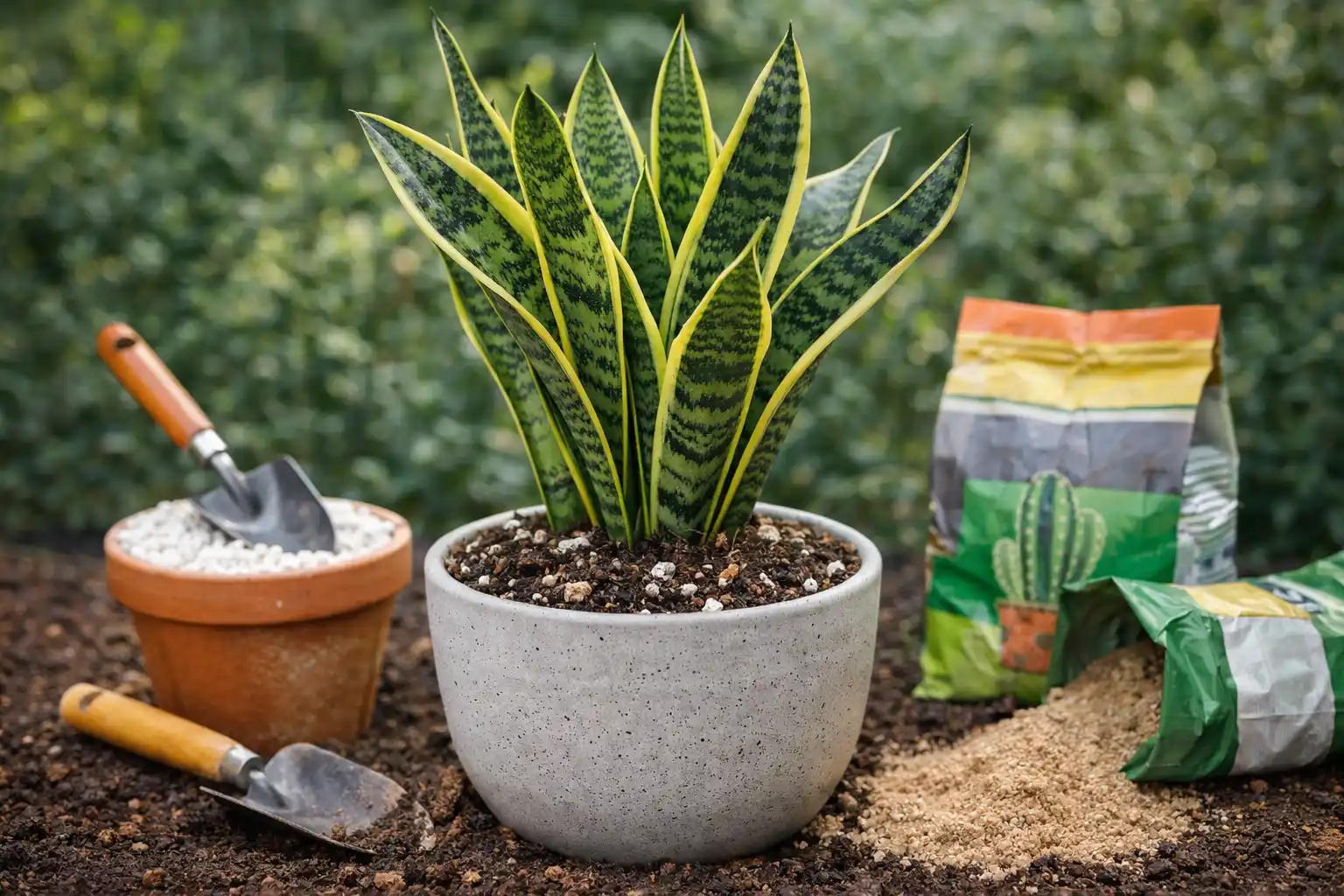
Yes, you can use regular potting soil for a snake plant, but it should not be used alone. Snake plants prefer fast draining soil, and standard potting soil often holds too much moisture. To keep the plant healthy, it is best to mix regular potting soil with materials like perlite, sand, or cactus mix to improve drainage.
Introduction
Snake plants are among the most popular houseplants in the United States because they are hardy, stylish, and easy to care for. Many beginners choose them as their first indoor plant since they tolerate low light, irregular watering, and indoor conditions better than most houseplants.
However, one of the most common questions plant owners ask is whether they can use regular potting soil for a snake plant. The short answer is yes, but there are important details you need to understand before doing so. Using the wrong soil mix can lead to root rot, slow growth, and unhealthy leaves.
This guide will explain everything you need to know about using regular potting soil for snake plants. You will learn the best soil combinations, how to improve drainage, common mistakes to avoid, and how to keep your snake plant thriving indoors.
Understanding Snake Plants and Their Natural Environment
Snake plants, scientifically known as Dracaena trifasciata (formerly Sansevieria), are native to dry regions of West Africa. In their natural habitat, they grow in sandy or rocky soil where water drains quickly. Because of this environment, they have adapted to store water in their thick leaves and roots.
This natural adaptation means snake plants behave more like succulents than traditional houseplants. They prefer soil that dries out between waterings and does not stay wet for long periods. If the soil remains damp, the roots may begin to rot.
From experience growing snake plants indoors, the soil type plays a major role in plant health. Plants placed in heavy soil tend to develop yellow leaves or soft roots, while those grown in loose, airy soil stay strong and upright.
Understanding their natural habitat helps explain why soil drainage is the most important factor when choosing a potting mix, which is also discussed in guides about the best snake plant soil for healthy growth.
Can You Use Regular Potting Soil for Snake Plants?
Regular potting soil can be used for snake plants, but only with modifications. Standard indoor potting mixes are designed for plants that need consistent moisture. These mixes often contain peat moss or coco coir, which retain water for long periods, so many growers prefer creating a snake plant soil mix that improves drainage.
For moisture loving plants like ferns or peace lilies, this is ideal. However, snake plants prefer drier conditions and quick draining soil. If regular potting soil is used alone, it may stay wet too long and create problems for the plant.
In real cases, many indoor gardeners notice that snake plants placed in heavy potting soil begin to decline after several months. The soil becomes compacted, water drains slowly, and the roots start suffocating.
To make regular potting soil suitable for snake plants, it should be combined with drainage improving ingredients such as perlite, coarse sand, pumice, or cactus mix. This adjustment allows water to pass through the soil quickly while still providing nutrients.
Why Regular Potting Soil Alone Can Be Risky
Using regular potting soil by itself may cause several problems for snake plants. These issues usually develop slowly, which is why many plant owners do not immediately recognize the cause.
Excess Moisture Retention
Most standard potting soils are designed to hold moisture so plants can absorb water over time. While this works well for tropical plants, it creates overly wet conditions for snake plants.
When soil holds too much moisture, the roots remain constantly damp. Over time, this environment encourages fungal growth and root decay.
Poor Drainage
Dense soil tends to drain slowly, especially when it becomes compacted after repeated watering. Poor drainage prevents oxygen from reaching the roots, which is essential for healthy plant growth.
Healthy roots need both moisture and air. Without sufficient airflow in the soil, roots weaken and struggle to support the plant.
Increased Risk of Root Rot
Root rot is one of the most common problems snake plant owners experience. It occurs when the roots sit in wet soil for too long, causing them to turn soft and black. This issue is frequently linked to an overwatered snake plant.
From experience, root rot often begins unnoticed because the leaves may appear healthy at first. By the time symptoms appear, the root system may already be severely damaged.
The Best Soil Mix for Snake Plants
To keep a snake plant healthy, the soil must balance drainage, aeration, and nutrients. Instead of relying on regular potting soil alone, many gardeners create a custom mix that allows excess water to drain quickly.
A well balanced soil mix provides structure for the roots while preventing water buildup. This environment closely mimics the plant’s natural growing conditions.
Simple Soil Mix Recipe
A beginner friendly soil recipe works well for most indoor snake plants.
Recommended mix
• 2 parts regular potting soil
• 1 part perlite
• 1 part coarse sand or pumice
This combination keeps the soil loose and airy while still providing organic nutrients.
Alternative Soil Mix Option
Another effective option is combining different commercial soil types.
Alternative mix
• 50 percent cactus or succulent soil
• 50 percent regular indoor potting soil
Cactus soil is designed for fast drainage, so mixing it with regular potting soil creates a balanced environment suitable for snake plants.
From experience, this method is one of the easiest ways for beginners to improve drainage without creating a complicated soil recipe.
Step by Step Guide to Preparing Snake Plant Soil
Preparing the correct soil mixture for a snake plant is simple and can greatly improve plant health. Follow these steps to create a well draining soil mix.
Step 1: Choose a Base Potting Soil
Start with a high quality indoor potting mix. Look for products labeled for indoor houseplants rather than outdoor garden soil.
Indoor potting soil typically contains peat moss or coco coir, which provide nutrients and structure for plant roots.
Step 2: Add Drainage Materials
Next, mix in ingredients that increase airflow and drainage. Perlite is one of the most common options because it is lightweight and improves soil aeration.
Other materials that work well include pumice, coarse sand, or orchid bark.
Step 3: Mix the Soil Thoroughly
Combine the ingredients in a large container and mix them evenly. This ensures that drainage materials are distributed throughout the soil rather than concentrated in one area.
A well mixed soil blend prevents water pockets from forming around the roots.
Step 4: Use a Pot with Drainage Holes
Even the best soil mix cannot prevent water buildup if the container does not allow excess water to escape.
Always use a pot with drainage holes at the bottom so water can flow out easily after watering.
Benefits of Using the Right Soil Mix
Choosing the correct soil mix offers several advantages for snake plants. Proper soil conditions support long term growth and reduce the risk of common plant problems.
Improved Root Health
Loose, airy soil allows roots to expand easily and absorb nutrients efficiently. Healthy roots provide the foundation for strong leaves and steady growth.
Reduced Risk of Overwatering
Well draining soil dries faster between waterings, which helps prevent excess moisture buildup. This reduces the likelihood of root rot.
Better Plant Growth
When soil conditions match the plant’s natural environment, snake plants grow stronger and produce healthier leaves.
In real cases, snake plants placed in well draining soil often grow faster and maintain vibrant green foliage.
Common Mistakes to Avoid
Many snake plant problems occur because of small mistakes related to soil and watering. Avoiding these errors can significantly improve plant health.
Using Garden Soil Indoors
Outdoor garden soil is too dense for indoor containers. It also may contain pests, fungi, or bacteria that harm houseplants.
Overwatering the Plant
Snake plants prefer dry conditions between waterings. Watering too frequently keeps the soil damp and increases the risk of root rot, which is why following a proper snake plant watering schedule is important.
Choosing Pots Without Drainage
Containers without drainage holes trap excess water in the soil. Even if the soil mix drains well, the trapped water can damage the roots.
Troubleshooting Snake Plant Soil Problems
Even with proper care, snake plants may occasionally develop soil related issues. Identifying the symptoms early helps prevent long term damage.
Yellow Leaves
Yellowing leaves often indicate overwatering or poor drainage. Check the soil moisture and allow it to dry before watering again, making sure you understand snake plant water needs to avoid future problems.
Mushy Roots
Soft or black roots are a sign of root rot. If this occurs, remove the plant from the soil, trim damaged roots, and repot the plant in fresh well draining soil.
Slow Growth
Snake plants naturally grow slowly, but extremely slow growth may indicate poor soil conditions. Replacing old compacted soil with fresh mix often improves plant health.
Quick Checklist for Snake Plant Soil
Use this checklist to ensure your snake plant soil is suitable for healthy growth.
• Use well draining indoor potting soil
• Mix in perlite, sand, or pumice
• Avoid heavy garden soil
• Use containers with drainage holes
• Allow soil to dry between watering
• Repot every two to three years with fresh soil
FAQs
Can snake plants grow in regular potting soil?
Yes, snake plants can grow in regular potting soil, but it should be modified with drainage materials. Mixing potting soil with perlite, sand, or cactus mix helps prevent excess moisture and keeps the roots healthy.
What is the best soil for snake plants?
The best soil for snake plants is well draining and airy. A mix of potting soil, perlite, and sand or cactus soil works well because it allows water to drain quickly while still providing nutrients.
Can I use succulent soil for snake plants?
Yes, succulent soil is an excellent option for snake plants because it drains quickly. Many plant owners mix succulent soil with regular potting soil to create a balanced growing medium.
How often should snake plant soil be changed?
Snake plants typically benefit from fresh soil every two to three years. Over time, potting soil becomes compacted and loses nutrients, which can affect plant growth, so many growers refresh the soil during repotting snake plants.
Do snake plants need special soil?
Snake plants do not require expensive specialty soil, but they do need well draining soil. Any indoor potting soil can work as long as it is mixed with materials that improve drainage and aeration.
Conclusion
So, can you use regular potting soil for snake plant? Yes, but it should not be used alone. Regular potting soil tends to retain too much moisture, which can lead to root rot and poor plant health.
By mixing potting soil with drainage materials like perlite, sand, or cactus mix, you create a soil environment that mimics the snake plant’s natural habitat. This simple adjustment improves airflow, prevents water buildup, and keeps the roots healthy.
When the soil drains properly and the plant is watered correctly, snake plants become one of the easiest and most reliable houseplants to grow indoors. With the right soil mix, your snake plant can thrive for years while adding beauty and greenery to your home.