

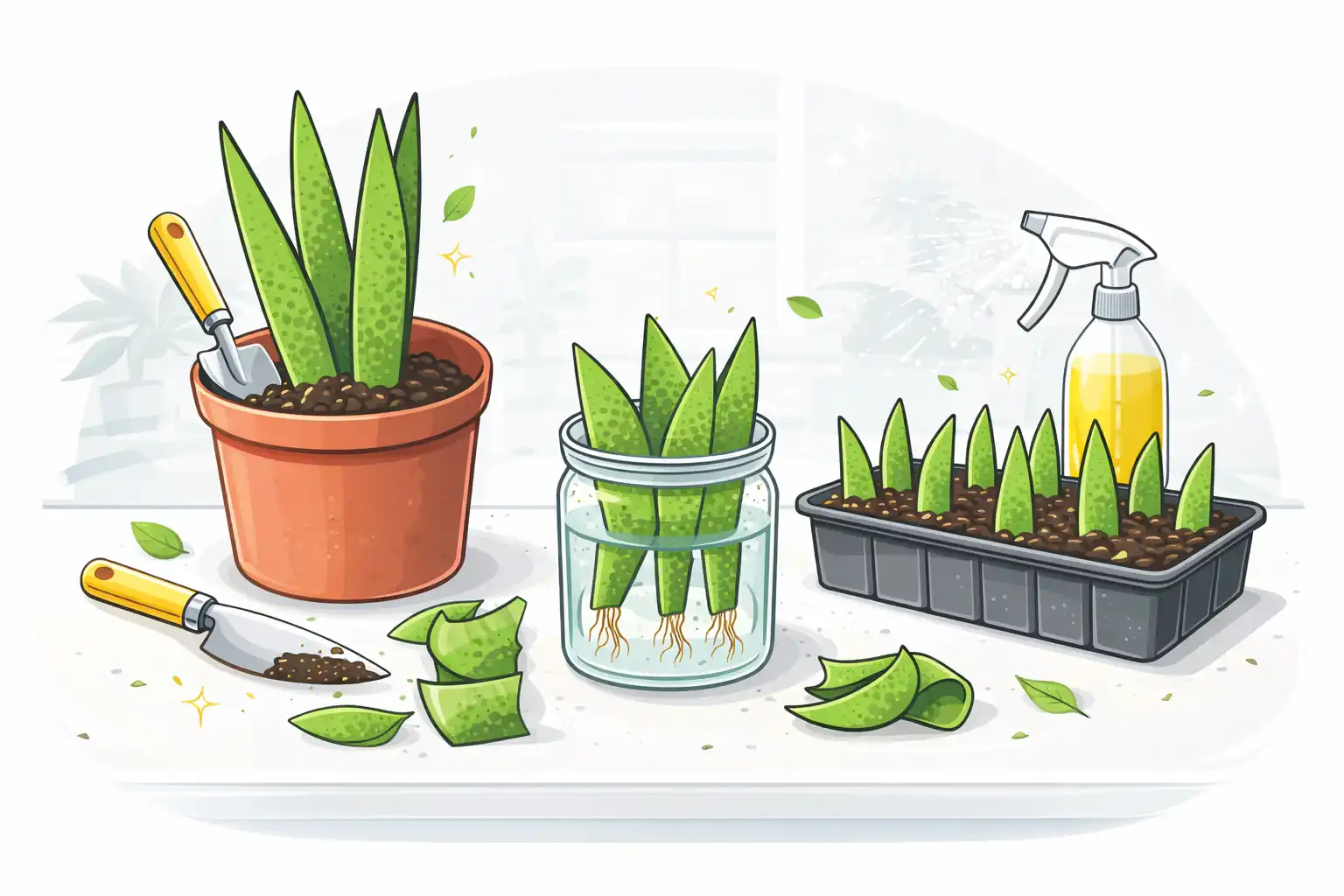
If you’re wondering how to propagate snake plants, the process is surprisingly simple: take a healthy leaf or divide the plant, place it in water or soil, and allow roots to develop over a few weeks. With patience and proper care, you can grow multiple plants from just one.
Snake plant propagation is one of the easiest ways to expand your indoor garden without spending money. Whether you’re a beginner or a plant enthusiast, learning how to propagate snake plants can help you multiply your collection quickly and successfully.
What Is Snake Plant Propagation?
Snake plant propagation is the process of creating new plants from an existing one. Instead of growing from seeds, you use parts of the parent plant like leaves, roots, or rhizomes.
This method is popular because snake plants are naturally resilient and adapt well to different environments. In real cases, even neglected plants can be revived and multiplied through propagation.
The most common ways of propagating snake plants include:
- Leaf cuttings in water
- Leaf cuttings in soil
- Division of roots (rhizomes)
Each method has its own benefits, which we’ll explore in detail.
Why Propagate Snake Plants?
There are several practical reasons why people choose snake plant propagation at home.
First, it’s cost-effective. Instead of buying new plants, you can grow more from what you already own. Second, it helps rejuvenate older or damaged plants. From experience, even a struggling plant can give healthy new growth through proper propagation.
Another benefit of snake plants is sharing. Propagated plants make great gifts for friends and family, especially for beginners who want low-maintenance greenery.
Best Time to Propagate Snake Plants
Timing plays a key role in successful propagation. While snake plants can be propagated year-round, the best time is during the growing season.
Ideal Conditions
- Spring and summer (active growth phase)
- Warm temperatures between 65°F to 85°F
- Bright, indirect sunlight
During colder months, the process slows down significantly. Roots may take longer to develop, and success rates can drop.
Method 1: How to Propagate Snake Plant in Water

Water propagation is one of the easiest and most beginner-friendly methods. It allows you to visually monitor root growth.
Step 1: Choose a Healthy Leaf
Select a mature, healthy leaf without damage or disease. Avoid very young or weak leaves. If your plant has damaged or overgrown leaves, it’s a good idea to first Trim Snake Plant properly before taking cuttings for propagation.
Step 2: Cut the Leaf
Use clean, sharp scissors to cut the leaf near the base. You can cut it into smaller sections if desired.
Step 3: Let It Callus
Allow the cut end to dry for 1 to 2 days. This prevents rot and infection.
Step 4: Place in Water
Put the bottom part of the cutting in a glass of water. Only submerge about 25% of the leaf.
Step 5: Provide Light
Place the container in bright, indirect sunlight. Avoid direct sun exposure.
Step 6: Change Water Weekly
Replace the water every 5 to 7 days to prevent bacteria buildup.
Step 7: Wait for Roots
Roots usually appear in 3 to 6 weeks. Once they are a few inches long, transfer to soil.
Pros and Cons
Pros
- Easy and beginner-friendly
- Visible root development
- Less messy
Cons
- Slower process
- Requires regular water changes
Method 2: Propagating Snake Plants in Soil
Soil propagation is more natural and requires less maintenance compared to water.
Step 1: Prepare the Cutting
Cut a healthy leaf and allow it to callus for a couple of days.
Step 2: Use Well-Draining Soil
Choose a cactus or succulent mix. Good drainage is essential to avoid root rot.
Step 3: Plant the Cutting
Insert the cutting about 1 to 2 inches deep into the soil.
Step 4: Water Lightly
Moisten the soil slightly, but avoid overwatering.
Step 5: Provide Proper Light
Keep the pot in bright, indirect light.
Step 6: Wait for Growth
Roots will develop in 4 to 8 weeks, followed by new shoots.
Pros and Cons
Pros
- Less maintenance
- Faster transition to a mature plant
- No need for transplanting
Cons
- Cannot see root development
- Slightly higher risk of failure if overwatered
Method 3: Propagating Snake Plants by Division
Division is the fastest and most reliable method, especially for mature plants.
Step 1: Remove the Plant
Gently take the plant out of its pot.
Step 2: Separate the Roots
Locate natural divisions in the root system (rhizomes). Use a clean knife to separate them.
Step 3: Ensure Each Section Has Roots
Each division should have roots and at least one healthy leaf.
Step 4: Repot Immediately
Plant each section in a separate pot with well-draining soil.
Step 5: Water Lightly
Water just enough to settle the soil.
Pros and Cons
Pros
- Fastest method
- High success rate
- Produces mature plants quickly
Cons
- Requires a large plant
- Can stress the parent plant
How Long Does Snake Plant Propagation Take?
Propagation is not instant, and patience is key.
- Water method: 3 to 6 weeks for roots
- Soil method: 4 to 8 weeks for root development
- Division: Immediate results with minor adjustment time
In real-world scenarios, factors like light, temperature, and plant health can affect timing.
Best Practices for Successful Snake Plant Propagation
To maximize your success rate, follow these proven strategies.
Use Clean Tools
Always sterilize scissors or knives before cutting. This prevents infection.
Avoid Overwatering
Snake plants are succulents. Too much water is the most common cause of failure.
Provide Indirect Light
Direct sunlight can burn cuttings, while low light slows growth.
Be Patient
From experience, many beginners give up too early. Root growth takes time.
Common Problems and How to Fix Them
Even though snake plants are hardy, propagation can sometimes fail.
Rotting Cuttings
Cause: Too much water or no callusing
Fix: Allow cuttings to dry before planting and reduce watering
No Root Growth
Cause: Low light or cold temperature
Fix: Move to a warmer, brighter location
Mushy Leaves
Cause: Overwatering or poor drainage
Fix: Use well-draining soil and water less frequently
Slow Growth
Cause: Natural slow-growing plant or poor conditions
Fix: Improve light and maintain consistent temperature
Common Mistakes to Avoid
Avoiding these mistakes can significantly improve your results.
- Planting cuttings upside down
- Skipping the callusing step
- Using heavy, water-retaining soil
- Overwatering young cuttings
- Expecting instant results
Pro Tips to Boost Propagation Success
Here are some expert-level tips to improve your results.
- Cut leaves into multiple sections to grow more plants
- Mark the bottom of each cutting to avoid confusion
- Use rooting hormone for faster root development
- Keep humidity moderate for better growth
From hands-on experience, even small adjustments like better lighting can dramatically improve success rates.
Quick Checklist for Propagating Snake Plants
Use this checklist to ensure everything is done correctly:
- Choose a healthy leaf
- Use clean cutting tools
- Let cuttings callus
- Use well-draining soil or clean water
- Provide bright, indirect light
- Avoid overwatering
- Be patient for several weeks
FAQs
1. What is the easiest way to propagate snake plants?
Water propagation is the easiest method for beginners. It allows you to monitor root growth and requires minimal effort. Simply place a cutting in water and wait for roots to develop.
2. Can I propagate snake plants from a single leaf?
Yes, a single leaf can produce multiple new plants. You can even cut it into sections to maximize propagation. Just ensure each piece is planted correctly.
3. Why is my snake plant cutting not growing roots?
This usually happens due to low light, cold temperatures, or impatience. Move the cutting to a brighter spot and give it more time to develop roots.
4. How often should I water propagated snake plants?
Water sparingly. Allow the soil to dry out completely between watering. Overwatering is the most common mistake and can cause rot.
5. Do propagated snake plants grow as fast as mature plants?
No, they start slow. New plants take time to establish roots and shoots. With proper care, growth will gradually improve over time.
Conclusion
Learning how to propagate snake plant is a valuable skill that can help you grow your indoor garden effortlessly. Whether you choose water, soil, or division, each method offers a reliable way to multiply your plants.
The key to successful snake plant propagation lies in patience, proper care, and avoiding common mistakes. With the right approach, even beginners can achieve great results and enjoy a thriving collection of healthy plants.