

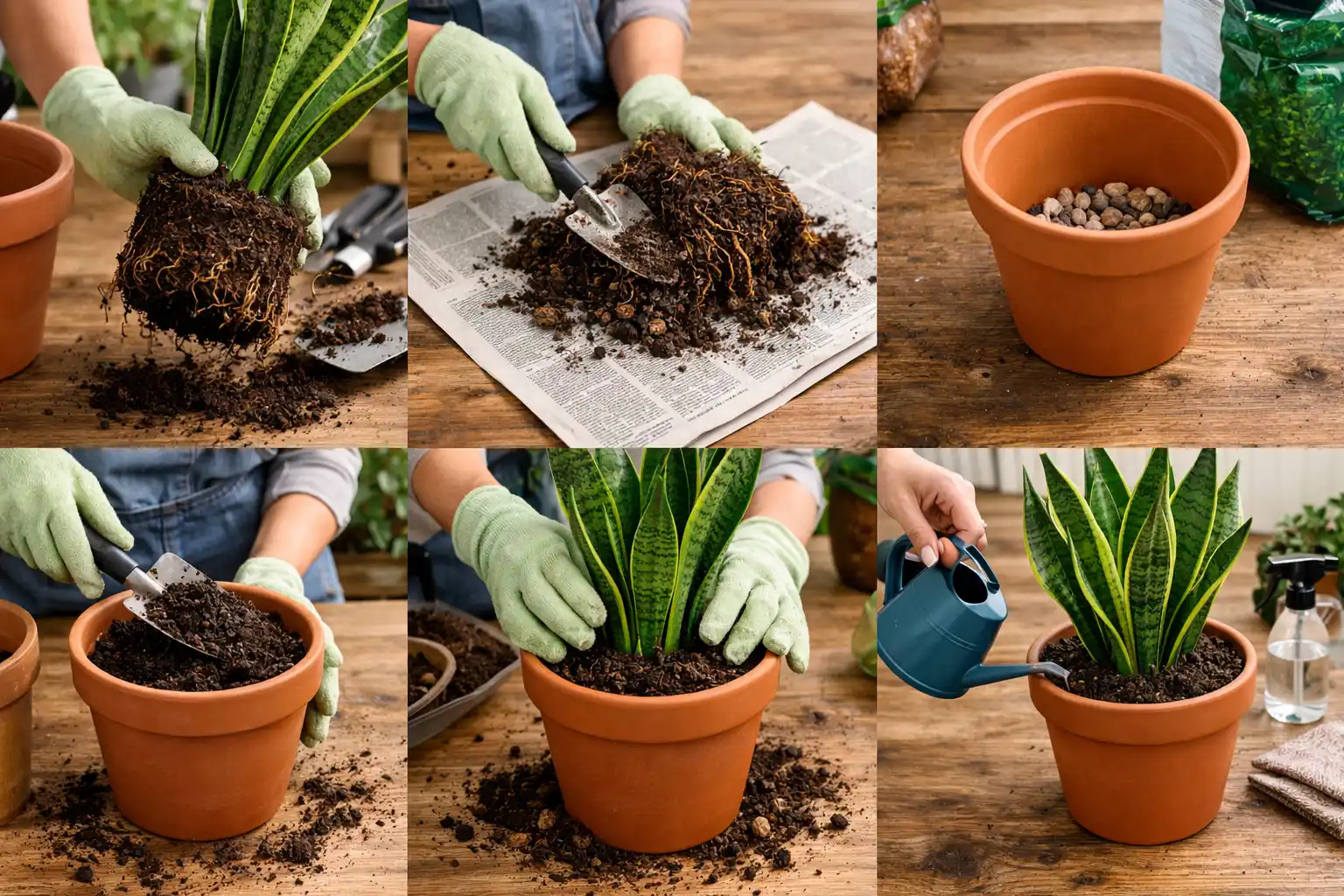
Repotting snake plants means transferring them into a slightly larger container with fresh, well draining soil to improve root space, prevent root rot, and support long term growth. The best time to repot is spring or early summer when the plant is actively growing and can recover quickly.
What Is Repotting a Snake Plant
Repotting a snake plant is the process of moving it from its current pot into a new container with fresh soil. This improves drainage, refreshes nutrients, and gives roots more space to grow.
Snake plants, also known as Dracaena trifasciata, are hardy indoor plants that tolerate neglect. However, over time, their soil becomes compacted and roots become crowded. Repotting solves these issues and helps maintain plant health, especially when following a proper snake plant care guide.
When Should You Repot a Snake Plant
The best time to repot snake plants is during spring or early summer. This is when the plant is in its active growth phase and can adapt quickly to new conditions.
Snake plants prefer to be slightly root bound, so repotting too often can stress the plant. Instead, focus on visible signs that indicate the plant needs more space.
Signs Your Snake Plant Needs Repotting
- Roots growing out of drainage holes
- Water draining too quickly
- Cracked or bulging pot
- Slow or no new growth
- Plant leaning or becoming unstable
If you notice multiple signs, it is time to report.
How Often Should You Repot Snake Plants
Most snake plants need repotting every 2 to 3 years. This depends on factors like light, watering habits, and growth speed.
Plants in bright indirect light tend to grow faster and may require repotting sooner. Slower growing plants in low light conditions can go longer without needing a new pot.
Experienced plant owners often check root density instead of relying only on time intervals.
Best Soil for Repotting Snake Plants

Snake plants require well draining soil to prevent excess moisture build up. Poor drainage is the most common reason snake plants fail after repotting.
Ideal Soil Options
- Cactus or succulent potting mix
- Regular potting soil with added perlite
- DIY mix using sand and coco coir
Recommended Soil Ratio
- 2 parts potting soil
- 1 part perlite or sand
This combination ensures airflow and prevents root rot.
Choosing the Right Pot for Snake Plants
The pot you choose directly affects plant health. Snake plants need containers that allow proper drainage and stability.
Best Pot Features
- Drainage holes at the bottom
- Slightly wider than the current pot
- Made of terracotta or ceramic
Terracotta pots are especially useful because they absorb excess moisture and help regulate watering.
Pot Size Rule
Increase the pot size by only 1 to 2 inches. A pot that is too large holds too much moisture and increases the risk of root rot.
Step by Step Guide to Repotting Snake Plants
Step 1 Prepare the Plant
Water the plant lightly a few hours before repotting. This helps loosen the soil and reduces stress.
Gather all tools including fresh soil, a new pot, and clean scissors.
Step 2 Remove the Plant from the Pot
Tilt the pot and gently pull the plant out. If it is stuck, press the sides or loosen the edges carefully.
Snake plant roots are strong, so careful handling is enough to prevent damage.
Step 3 Inspect and Clean the Roots
Remove excess soil and examine the roots.
Healthy roots are firm and light in color. Trim any roots that are soft, black, or rotting.
Step 4 Place in New Pot
Add a base layer of soil in the new pot. Position the plant at the same depth as before.
Do not bury the crown because it can cause rot.
Step 5 Fill Soil and Stabilize
Fill around the roots with soil and gently press to remove air pockets.
Make sure the plant is stable and upright.
Step 6 Position for Recovery
Place the plant in bright indirect light. Avoid direct sunlight immediately after repotting and ensure proper light requirements are maintained.
Snake Plant Aftercare After Repotting
Aftercare is critical to ensure successful reporting.
Watering
Wait 5 to 7 days before watering. This prevents root rot and allows roots to adjust, following proper watering frequency.
Light
Keep the plant in bright indirect light for optimal recovery.
Fertilizer
Avoid fertilizing for at least one month because fresh soil provides nutrients.
Benefits of Repotting Snake Plants
Repotting improves plant health in several ways.
Key Benefits
- Encourages new growth
- Improves nutrient availability
- Prevents root crowding
- Reduces disease risk
- Enhances plant stability
Many plant owners notice stronger leaves and faster growth after repotting, especially when combined with proper maintenance like trimming for growth.
Common Mistakes to Avoid
Avoid these mistakes to ensure success.
- Watering immediately after repotting
- Using heavy soil that retains moisture
- Choosing a pot that is too large
- Damaging roots excessively
- Placing the plant in direct sunlight too soon
Each mistake can lead to stress or root problems.
Troubleshooting Common Problems
Snake Plant Drooping After Repotting
This is usually due to transplant shock or overwatering. Let the soil dry and keep conditions stable.
Yellow Leaves After Repotting
Yellowing often indicates poor drainage or excess water. Adjust watering and check soil quality, as seen in common overwatering signs.
No Growth After Repotting
Growth may pause temporarily as the plant adjusts. This is normal and usually resolves within weeks.
Can You Divide Snake Plants During Repotting
Yes, repotting is the best time to divide snake plants and use easy propagation methods to grow new plants.
Look for small offshoots called pups. Separate them carefully with roots attached and plant them in new pots.
This method allows you to grow multiple plants from one.
Expert Tips for Better Results
- Always prioritize drainage over aesthetics
- Keep watering minimal
- Use breathable pots like terracotta
- Repot only when necessary
- Monitor plant condition after repotting
These strategies improve long term plant health.
Key Takeaways
- Repot snake plants every 2 to 3 years
- Use well draining soil
- Increase pot size gradually
- Wait before watering
- Provide indirect light
FAQs
How do I know if my snake plant needs repotting
Look for roots coming out of the pot, fast draining water, or slow growth. These signs indicate the plant needs more space.
Can I repot a snake plant in winter
It is possible, but not ideal. Repotting during the growing season allows faster recovery.
Should I water immediately after repotting
No, wait a few days before watering to prevent root rot.
What soil is best for snake plants
A cactus or succulent mix with added perlite or sand is best.
Can I use a bigger pot for faster growth
No, a larger pot can retain excess moisture and harm the plant.
Conclusion
Repotting snake plants is a simple but essential process that ensures healthy growth and long term survival. By choosing the right soil, using the correct pot size, and following a structured method, you create the ideal environment for your plant while maximizing the benefits of snake plants.
Understanding repotting snake plants allows you to prevent common issues and maintain strong, healthy indoor plants. Apply these proven strategies consistently, and your snake plants will thrive for years.