

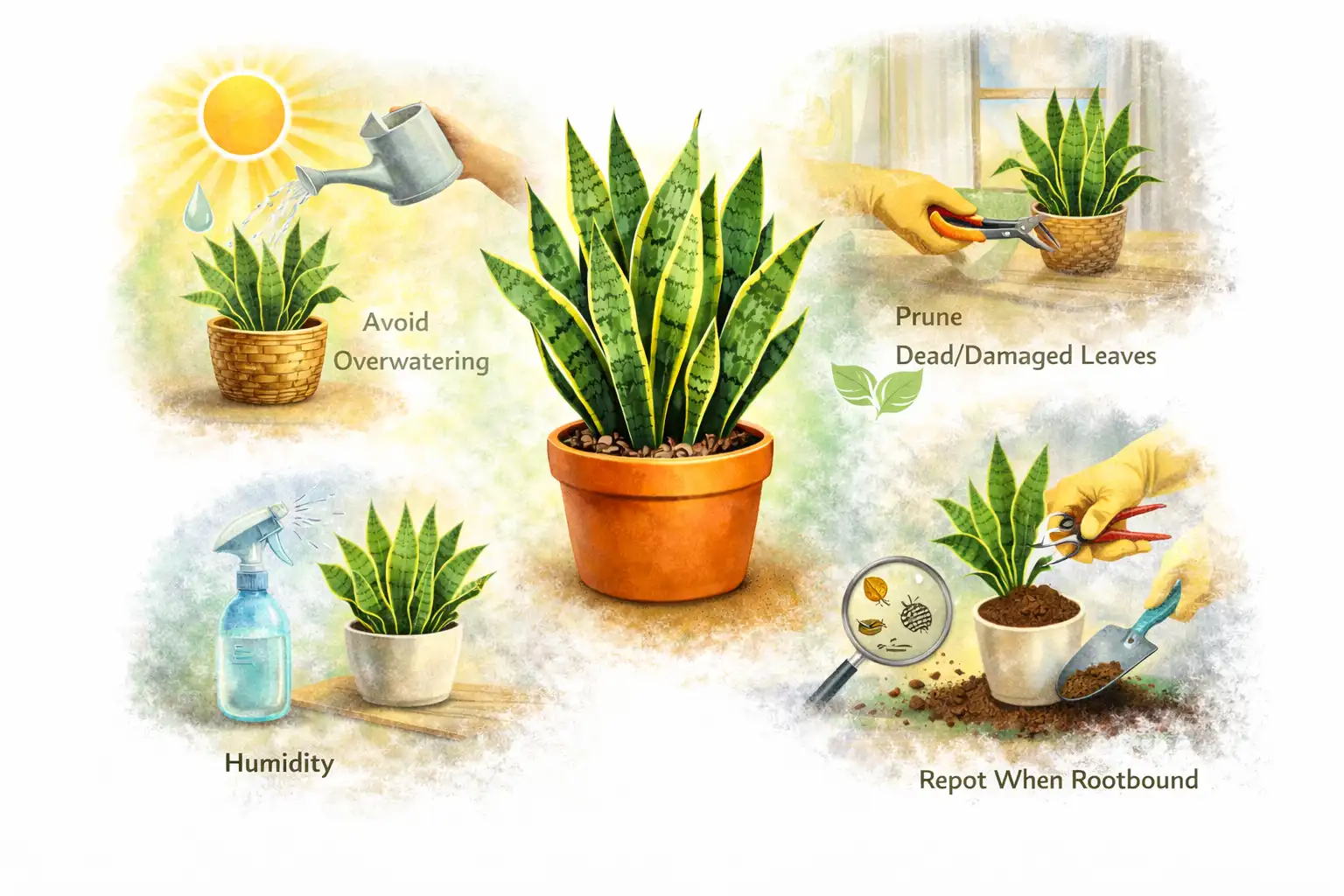
Snake Plant Care is simple and beginner-friendly—these hardy plants thrive in low light, need minimal watering, and adapt well to indoor environments. To care for a snake plant, provide indirect light, water only when soil is dry, and use well-draining soil to prevent snake plant root rot.
Introduction to Snake Plant Care
Snake plants, also known as Dracaena trifasciata, are among the easiest houseplants to grow indoors. If you’re new and wondering what is a snake plant, or searching for how to care for snake plant or how to take care of snake plant, you’re in the right place. These plants are loved for their resilience, modern appearance, and ability to survive neglect.
From experience, many beginners succeed with snake plants because they require less attention compared to most houseplants. However, proper care can transform your plant from simply surviving to truly thriving.
In this complete snake plants care guide, you’ll learn everything from basic care to advanced troubleshooting—perfect for beginners and plant enthusiasts alike.
What Is Snake Plant Care Indoors?
Snake plant care indoors refers to maintaining the right balance of light, water, soil, and environment for healthy growth. These plants are semi-succulents, meaning they store water in their leaves, making them drought-tolerant.
In real cases, people often overwater snake plants, thinking they need frequent care. In reality, less is more. Proper indoor care focuses on controlled watering and well-draining soil.
Light Requirements for Snake Plant Care Indoors
Ideal Lighting Conditions
Snake plants are highly adaptable and can grow in a wide range of lighting conditions. However, they perform best in bright, indirect light. If you’re unsure do snake plants need sunlight, understanding their light tolerance helps prevent slow growth and weak leaves.
Place your plant near an east- or west-facing window where it can receive filtered sunlight. While they tolerate low light, growth slows significantly in darker areas.
Low Light vs Bright Light
In low-light conditions, snake plants survive but grow slowly and may lose their vibrant patterns. In bright indirect light, they grow faster and produce stronger leaves.
From experience, placing a snake plant in moderate light results in the healthiest balance between growth and maintenance.
How to Water a Snake Plant Properly

Watering Frequency
Watering is the most critical part of taking care of a snake plant. Always allow the soil to dry completely before watering again.
Typically, water every 2–4 weeks in summer and even less in winter. The exact frequency depends on your indoor conditions and understanding how often to water a snake plant.
Signs of Overwatering and Underwatering
Overwatering is the number one cause of plant death. Yellow leaves and mushy roots are clear signs of too much water, often related to an overwatered snake plant.
Underwatering, on the other hand, causes wrinkled or dry leaves. While less harmful, it still affects plant health.
From real experience, it’s always safer to underwater than overwater a snake plant.
Best Soil and Pot for Snake Plant Care
Choosing the Right Soil
Snake plants require fast-draining soil to prevent root rot. A cactus or succulent mix works best, as it allows excess water to drain quickly, similar to the best soil for snake plants recommended by indoor plant experts.
Avoid heavy, moisture-retaining soil mixes, as they can suffocate the roots and lead to disease. Choosing the perfect soil mix helps maintain proper drainage and root health.
Selecting the Right Pot
Use pots with drainage holes to allow excess water to escape. Terracotta pots are especially helpful because they absorb moisture and reduce the risk of overwatering, especially when repotting snake plants.
In real cases, switching to a well-draining pot can significantly improve plant health.
Temperature and Humidity Needs
Ideal Indoor Climate
Snake plants prefer temperatures between 65°F and 85°F, making them perfect for typical indoor environments in the USA.
Avoid placing them near cold drafts, air conditioners, or heaters, as extreme temperature changes can damage the plant.
Humidity Levels
These plants thrive in average household humidity and do not require additional moisture. This makes them ideal for apartments, offices, and homes with dry air.
From experience, snake plants are one of the few houseplants that truly adapt to almost any indoor climate.
Fertilizing Snake Plants
When and How to Fertilize
Snake plants do not need frequent feeding, but a small boost during the growing season can help.
Fertilize once a month in spring and summer using a balanced liquid fertilizer diluted to half strength.
Avoid Over-Fertilizing
Too much fertilizer can damage roots and cause leaf burn. Always use less rather than more.
In real cases, plants that are fertilized lightly perform better than those that are overfed.
Step-by-Step Snake Plant Care Guide
Simple Care Routine
Follow this easy routine for effective care for snake plant indoors:
- Place in indirect sunlight
- Use well-draining soil
- Water only when soil is dry
- Avoid overwatering
- Fertilize lightly during growth season
This routine ensures consistent growth and long-term health.
Benefits of Snake Plant Indoors
Why Snake Plants Are Popular
Snake plants are not just easy to care for they also offer several benefits. If you’re curious about the benefits of snake plant, they go beyond simple decoration.
They help improve indoor air quality, release oxygen at night, and add a modern aesthetic to any room.
Practical Advantages
From experience, snake plants are perfect for busy individuals because they require minimal attention. They also fit well in small spaces due to their upright growth.
Common Snake Plant Problems and Solutions
Yellow Leaves
Yellowing leaves usually indicate overwatering. Reduce watering and ensure proper drainage.
Root Rot
Root rot occurs when the plant sits in wet soil for too long. Remove damaged roots and repot in fresh soil.
Drooping Leaves
Drooping leaves may result from poor lighting or overwatering. Adjust light exposure and watering habits.
Wrinkled Leaves
Wrinkled leaves are a sign of dehydration. Water thoroughly and monitor soil moisture.
From real cases, most problems are easily fixed once the cause is identified.
Mistakes to Avoid in Snake Plant Care
Overwatering
This is the most common mistake and the leading cause of plant death.
Using Poor Soil
Heavy soil retains water and leads to root rot.
Placing in Direct Harsh Sunlight
Too much direct sun can burn the leaves.
Ignoring Drainage
Always use pots with drainage holes to prevent water buildup.
Avoiding these mistakes ensures long-term success.
How to Propagate a Snake Plant
Propagation by Division
Divide the plant at the roots and replant each section in a new pot. This is the fastest and most reliable method.
Propagation by Leaf Cuttings
Cut a healthy leaf and place it in water or soil until roots develop. This method takes longer but is rewarding and is explained in detail in propagate snake plant methods.
From experience, division is the easiest method for beginners.
Snake Plant Care Checklist
- Bright, indirect light preferred
- Water every 2–4 weeks
- Use well-draining soil
- Maintain indoor temperatures
- Fertilize lightly in spring/summer
- Avoid overwatering
This checklist simplifies snake plant care indoors for daily use.
FAQs
How often should I water a snake plant?
Water your snake plant only when the soil is completely dry. This usually means every 2–4 weeks, depending on indoor conditions and how much water snake plant needs.
Can snake plants grow in low light?
Yes, snake plants can survive in low light, but growth will be slower. For best results, place them in bright indirect light.
Why are my snake plant leaves turning yellow?
Yellow leaves are often caused by overwatering. Reduce watering frequency and ensure proper drainage to fix the issue.
Do snake plants need fertilizer?
They need minimal fertilizer. Feed once a month during the growing season for better growth, but avoid over-fertilizing.
Is snake plant good for bedrooms?
Yes, snake plants release oxygen at night, making them a great choice for bedrooms and indoor spaces.
Conclusion
Snake Plant Care is simple, making it one of the best choices for beginners and busy plant owners. By providing proper light, controlled watering, and well-draining soil, you can keep your plant healthy for years.
Whether you’re learning how to care for snake plant or improving your indoor plant routine, consistency is key. Follow the guidelines in this snake plants care guide, and your plant will not just survive—it will thrive.
Start simple, avoid overwatering, and let your snake plant do the rest.