

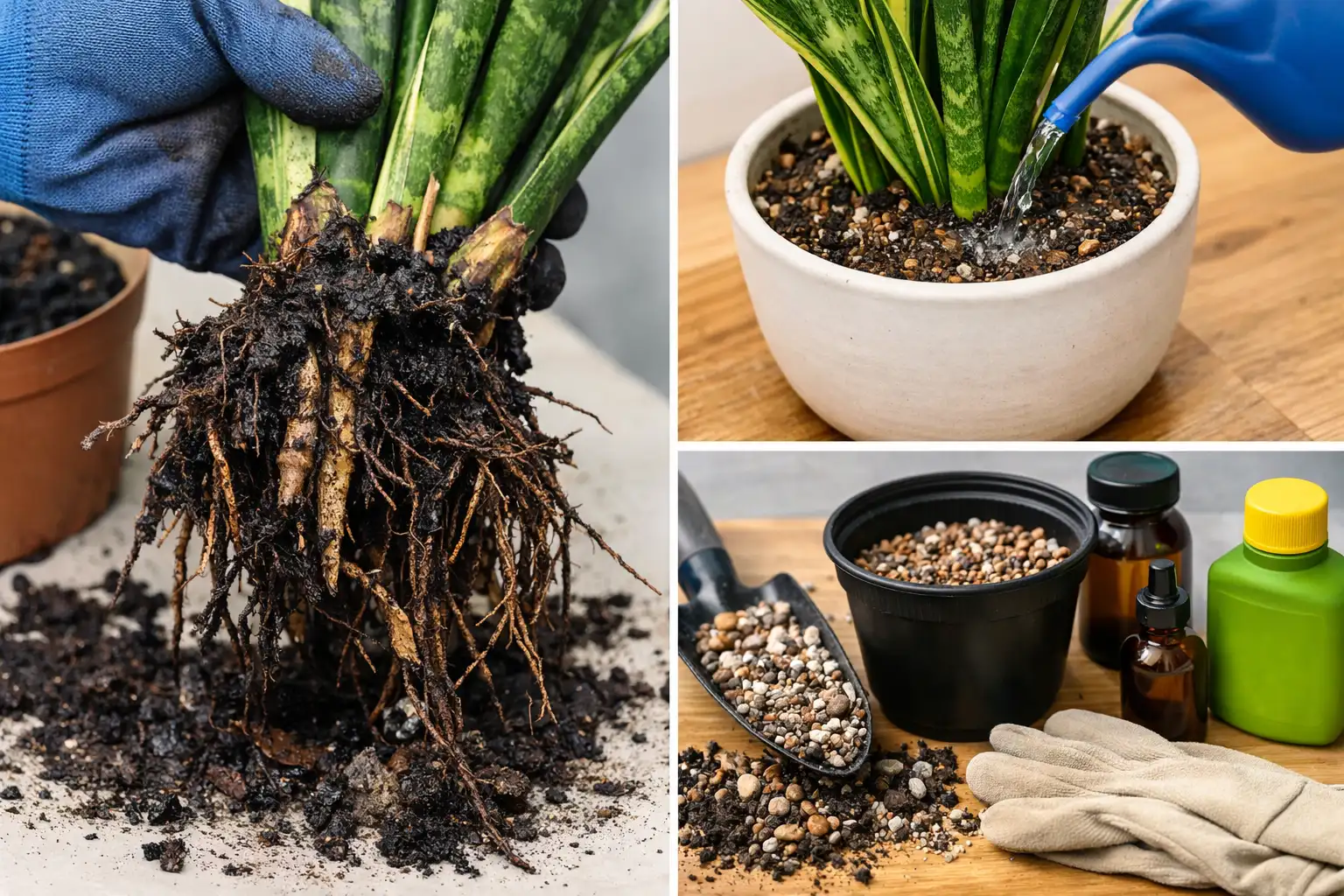
Snake plant root rot is a common issue caused by overwatering and poor drainage, leading to mushy, dark roots that can kill the plant if untreated. The best solution is to remove the plant, trim affected roots, and repot in well-draining soil. Prevention focuses on proper watering and airflow.
Introduction
Snake plants are known for being nearly indestructible, which is why many beginners choose them as their first houseplant after learning what is a snake plant. However, even this hardy plant has one major weakness: root rot. If you’ve noticed yellow leaves, soft stems, or a foul smell coming from the soil, your plant may already be in trouble.
Understanding snake plant root rot is essential if you want your plant to thrive long-term as explained in this snake plant care guide. The good news is that with the right approach, you can often save your plant—even if the damage looks severe. In this guide, you’ll learn everything from basic signs to advanced treatment and prevention strategies.
What Is Snake Plant Root Rot?
Snake plant root rot is a fungal or bacterial condition that causes the plant’s root system to decay. It usually develops when the soil stays wet for too long, depriving roots of oxygen and creating the perfect environment for harmful pathogens.
From experience, many plant owners assume their snake plant is “thirsty” when leaves droop—but this often leads to overwatering, which triggers root rot. Once roots start rotting, they can no longer absorb nutrients or water properly, causing the entire plant to weaken.
Healthy roots are firm and light-colored, while unhealthy snake plant roots appear brown, black, mushy, and sometimes smell bad. Recognizing this difference early can save your plant.
Signs of Root Rot in Snake Plant
Yellowing and Drooping Leaves

One of the earliest signs of root rot in snake plant is yellowing leaves. These leaves may feel soft and limp instead of firm and upright. The plant loses its structure because damaged roots cannot support healthy growth.
In real cases, yellow leaves are often mistaken for underwatering. However, if the soil is already moist, adding more water only worsens the problem. Always check the soil before watering and follow a proper how often to water routine to avoid misdiagnosis.
Mushy or Soft Base
When root rot progresses, the base of the plant becomes soft and squishy. This is a serious warning sign that the infection has moved beyond the roots and into the stem.
If you gently press the base and it feels mushy, immediate action is required. At this stage, saving the plant becomes more difficult but still possible if healthy sections remain.
Foul Smell from Soil
A strong, unpleasant odor coming from the soil is a clear indicator of root rot on snake plant. This smell is caused by decaying organic matter and bacterial activity.
From experience, this is often the point where people finally realize something is wrong. Unfortunately, by then, the rot may already be advanced, making treatment more challenging.
Black or Brown Mushy Roots
The most definitive sign appears when you inspect the roots directly. Healthy roots are firm and light in color, while rotten roots are dark, slimy, and easily break apart.
If most of the roots look like this, your plant is severely affected. However, even then, you may still salvage parts of the plant through propagate snake plant methods.
Causes of Snake Plant Root Rot
Overwatering
Overwatering is the number one cause of overwatered snake plant root rot. Snake plants are drought-tolerant and do not need frequent watering.
When soil stays wet for too long, oxygen levels drop, suffocating the roots. This creates an environment where fungi thrive and begin breaking down the root system.
Poor Drainage
Even if you water correctly, poor drainage can still lead to problems. Pots without drainage holes trap water at the bottom, keeping roots constantly wet.
In real cases, decorative pots without holes are a major contributor to snake plant roots rotting, especially in indoor environments where evaporation is slower.
Incorrect Soil Type
Heavy or compact soil holds too much moisture, preventing proper airflow around the roots. Snake plants require well-draining soil, similar to what succulents need.
Using regular garden soil instead of a light mix can quickly lead to root rot, even with moderate watering habits explained in snake plant care practices.
Large Pot Size
A pot that is too large retains more water than necessary. This slows down drying time and increases the risk of rot.
From experience, snake plants actually prefer slightly tight spaces. Oversized pots often do more harm than good.
Cold Temperatures and Low Light
Low light and cold conditions slow down the plant’s growth and water usage, which ties directly to understanding light requirements for healthy growth. This means the soil stays wet longer, increasing the risk of rot.
Many indoor cases of root rot snake plant occur during winter when watering habits are not adjusted.
Snake Plant Root Rot Treatment (Step-by-Step Guide)

Step 1: Remove the Plant from the Pot
Start by gently removing the plant from its pot. Shake off as much soil as possible and rinse the roots under lukewarm water.
This step helps you clearly see which roots are healthy and which are affected. Be gentle to avoid damaging any viable roots.
Step 2: Trim Rotten Roots
Using sterilized scissors, cut away all mushy, dark, and damaged roots. Only firm, healthy roots should remain.
From experience, it’s better to remove more than less. Leaving even a small portion of infected root can cause the rot to return.
Step 3: Disinfect the Roots
After trimming, treat the roots with a mild solution such as diluted hydrogen peroxide or a fungicide. This helps kill any remaining bacteria or fungal spores.
Allow the roots to dry for a few hours before repotting. This drying step is crucial to prevent further infection.
Step 4: Repot in Fresh Soil
Use a clean pot with proper drainage and fresh, well-draining soil. A cactus or succulent mix works best.
Avoid reusing old soil, as it may still contain harmful pathogens that can reinfect the plant.
Step 5: Adjust Watering Routine
After repotting, wait a few days before watering. This allows the roots to recover and reduces the risk of further damage.
Going forward, water only when the soil is completely dry. This is the most important part of snake plant root rot treatment.
Preventing Root Rot in Snake Plants
Proper Watering Technique
Water your snake plant only when the soil is dry at least 2 inches deep. Overwatering is far more dangerous than underwatering.
From experience, most plant owners water too frequently out of habit. Learning to wait is key to prevention.
Use Well-Draining Soil
Always use a soil mix designed for succulents or add materials like perlite or sand to improve drainage.
This ensures excess water flows out quickly, preventing soggy conditions that lead to rot.
Choose the Right Pot
Select a pot with drainage holes and avoid oversized containers. Terracotta pots are especially helpful because they absorb excess moisture.
The right pot can significantly reduce the risk of root rot treatment snake plant scenarios later on.
Maintain Proper Environment
Keep your plant in bright, indirect light and avoid cold drafts. Warm, well-lit environments help the soil dry faster.
This reduces the chances of moisture buildup and keeps roots healthy.
Common Mistakes to Avoid
Watering on a Schedule
One of the biggest mistakes is watering on a fixed schedule instead of checking the soil. Snake plants do not follow strict watering timelines.
Always base watering decisions on soil dryness, not routine.
Ignoring Early Signs
Many people ignore yellow leaves or soft stems, assuming the plant will recover on its own. Early action is critical.
Delaying treatment allows the rot to spread deeper into the plant.
Reusing Contaminated Soil
Using old soil after a rot issue can reintroduce the same problem. Always use fresh, clean soil when repotting.
This simple step can prevent recurring infections.
Troubleshooting Severe Root Rot Cases
When Most Roots Are Gone
If most of the roots are damaged, your best option is to propagate healthy leaves. Cut above the rotten section and allow the cut to dry before replanting.
This method can help you grow a new plant even if the original root system is lost.
When the Base Is Rotting
If the base or crown is soft, the infection has spread significantly. In this case, saving the plant becomes difficult.
However, you can still attempt propagation if any healthy parts remain.
When the Plant Doesn’t Recover
Sometimes, despite your best efforts, the plant may not recover. This usually happens when rot is too advanced.
From experience, it’s important to learn from the mistake and adjust your care routine for future plants.
Benefits of Proper Root Care
Maintaining healthy roots ensures your snake plant grows strong, upright leaves and resists disease. Healthy roots absorb nutrients efficiently, supporting long-term growth.
Proper care also reduces maintenance effort, as a well-maintained snake plant requires minimal attention. Preventing snake plant roots rotting saves both time and money in the long run.
Quick Checklist for Snake Plant Root Rot
- Check soil dryness before watering
- Use pots with drainage holes
- Avoid oversized containers
- Use well-draining soil mix
- Inspect roots during repotting
- Remove damaged roots immediately
- Keep plant in warm, bright conditions
FAQs
Can a snake plant recover from root rot?
Yes, a snake plant can recover if the rot is caught early. Remove damaged roots and repot in fresh soil to give it a chance to regrow healthy roots.
How often should I water a snake plant?
Water only when the soil is completely dry. This usually means every 2–4 weeks, depending on light and temperature conditions.
What do healthy snake plant roots look like?
Healthy roots are firm, thick, and light-colored. They should not feel mushy or have any unpleasant smell.
Can I reuse soil after root rot?
No, it’s not recommended. Old soil may contain fungi or bacteria that can cause the rot to return.
Is root rot always caused by overwatering?
Most of the time, yes. However, poor drainage, compact soil, and low light conditions can also contribute to the problem.
Conclusion
Snake plant root rot is one of the few serious threats to this otherwise resilient plant, but it’s entirely manageable with the right knowledge. By recognizing early signs, understanding causes, and applying proper snake plant root rot treatment, you can save your plant and prevent future issues.
The key takeaway is simple: less water, better drainage, and regular inspection. Master these basics, and your snake plant will thrive for years to come.