

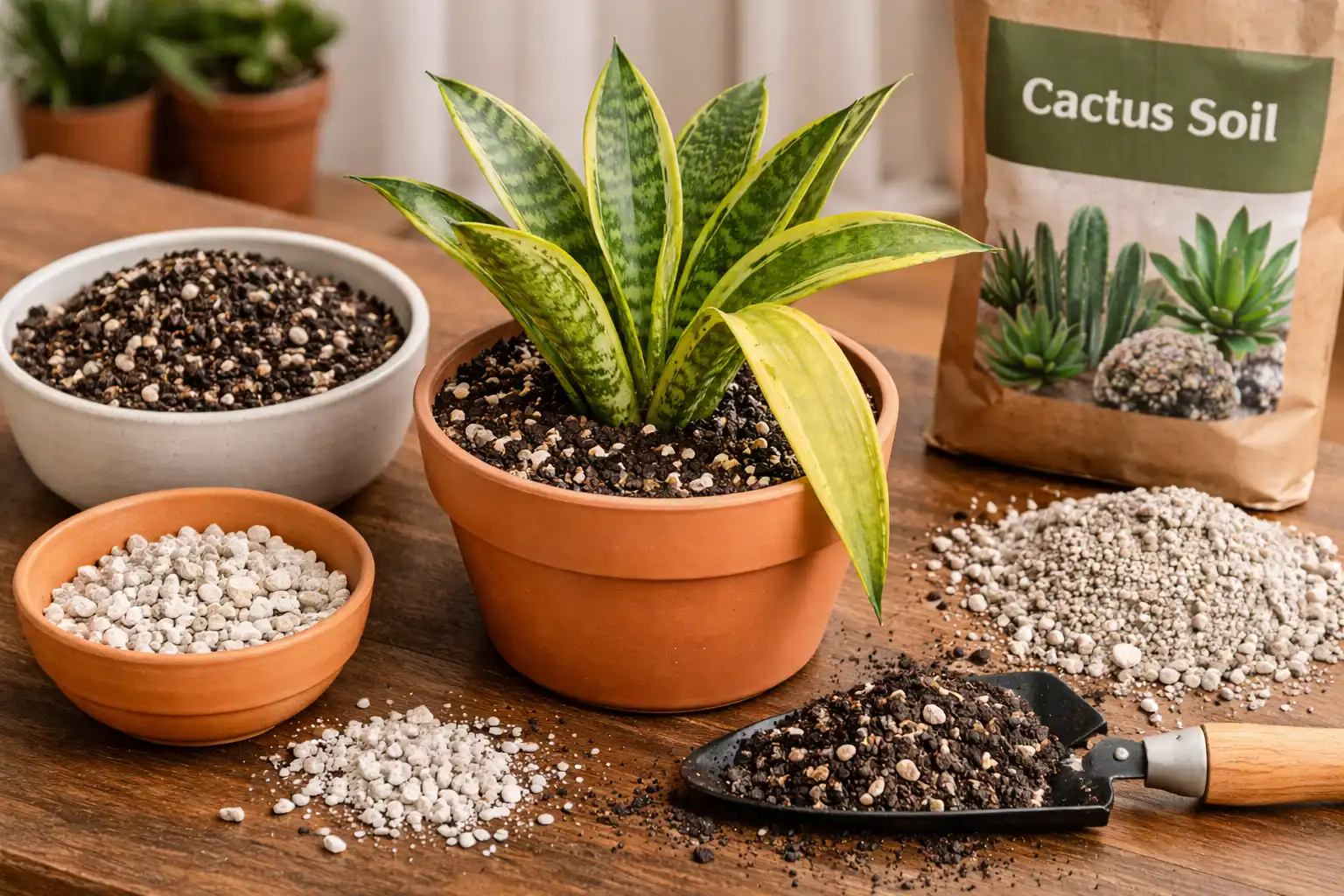
The best snake plant soil is a well-draining, airy mix that prevents water from sitting around the roots. A cactus or succulent potting mix works perfectly, especially when improved with perlite or pumice for extra drainage. Snake plants hate soggy soil, so fast-draining soil is the key to healthy growth. Choosing the correct snake plant soil type is the foundation of long-term plant health.
Introduction
Snake plants are known as nearly indestructible houseplants. They tolerate low light, irregular watering, and dry indoor air. But despite their tough reputation, most snake plants fail for one reason – poor soil.
From experience working with indoor plants across different U.S. climates, I can confidently say that using the wrong snake plant soil causes more root rot than overwatering alone, especially when basic snake plant care principles are overlooked. The soil mix determines how quickly water drains, how much air reaches the roots, and whether your plant survives long term.
This complete soil guide will walk you through everything beginner basics, best practices, soil recipes, common mistakes, and troubleshooting problems so you can confidently choose the best soil for snake plant success.
What Is Snake Plant Soil and Why Does It Matter?
Snake plant soil refers to a fast-draining potting mix specifically suited for drought-tolerant plants like snake plants. These plants store water in their thick leaves and rhizomes, so they do not tolerate constantly moist soil.
Unlike tropical houseplants that prefer moisture retention, snake plants need airflow around their roots. In heavy soil, water gets trapped and suffocates the roots. This leads to fungal growth and root rot, which is the fastest way to kill this plant and often requires proper root rot treatment to prevent permanent damage. In real cases, I’ve seen perfectly healthy snake plants decline within weeks simply because they were planted in dense, peat-heavy potting soil with poor drainage.
Understanding Snake Plants and Their Natural Habitat
Snake plants, botanically known as Dracaena trifasciata, are native to dry regions of West Africa. In nature, they grow in sandy, rocky soil with excellent drainage and long dry periods between rainfall.
Because of this natural adaptation, their roots evolved to handle drought — not wet, compact soil. Their thick leaves store moisture, acting like a reservoir. This means they actually prefer to dry out completely before being watered again.
When you replicate these dry, well-draining soil conditions indoors, your plant grows upright, firm, and vibrant. When you don’t, problems start quickly.
What Is the Best Soil for Snake Plant?
The best soil for snake plants is a loose, gritty, fast-draining mix that allows excess water to pass through immediately. The goal is to prevent water from sitting at the bottom of the pot.
A high-quality cactus or succulent mix is usually the safest option. However, you can improve it further by adding extra drainage materials like perlite or pumice.
An ideal soil for snake plant should:
- Drain quickly after watering
- Feel airy and loose, not dense
- Contain mineral components like sand or pumice
- Have a slightly acidic to neutral pH between 5.5 and 7.5
From experience, even “succulent soil” from big box stores sometimes holds too much moisture. Always check the texture. If it feels heavy or compact, amend it.
Can You Use Regular Potting Soil for Snake Plant?

Regular potting soil alone is not recommended for snake plants. Most all-purpose indoor mixes are designed to retain moisture, which increases the risk of root rot.
That said, you can modify regular soil. If you already have a houseplant mix, combine:
- 2 parts regular potting soil
- 1 part perlite or pumice
- 1 part coarse sand
This creates a more breathable mix suitable for snake plant soil needs.
In many real cases, simply adding perlite dramatically improves drainage and saves struggling plants.
Step-by-Step Guide: How to Make DIY Snake Plant Soil
Making your own soil for snake plant care is simple and cost-effective. It also allows you to control drainage levels based on your home’s humidity and lighting.
Choose Your Base Mix
Start with either a cactus mix or a standard indoor potting soil. If your home has high humidity, cactus mix is safer. If you live in a dry climate, regular soil amended with drainage works fine.
The base mix provides nutrients and structure for root growth.
Add Drainage Material
Mix in perlite, pumice, or coarse sand. These materials create air pockets and prevent compaction.
A good ratio is:
- 2 parts base soil
- 1 part perlite or pumice
This ratio balances moisture retention and drainage.
Optional Organic Boost
If desired, add a small amount of worm castings or compost. This improves nutrient content without making the mix heavy.
Be cautious not to overdo organic material. Too much compost increases moisture retention.
Mix Thoroughly
Blend everything evenly before potting. The final texture should feel loose and crumbly, not sticky.
Best Store-Bought Soil Options for Snake Plant
If you prefer ready-made solutions, look for:
- Cactus potting mix
- Succulent soil blend
- Indoor plant mix labeled as fast-draining
Always inspect the bag. Avoid mixes high in peat moss without drainage amendments. The best soil for snake plant indoors will contain visible grit or perlite particles.
In professional settings, I always recommend testing drainage by watering once and observing how quickly water exits the drainage holes.
Soil and Pot Pairing – Why It Matters
Even the best snake plant soil won’t work in the wrong pot. Drainage holes are mandatory.
Terracotta pots are ideal because they absorb excess moisture. Plastic pots retain more water and require extra caution.
From experience, pairing fast-draining soil with a breathable pot reduces root rot risk by nearly half.
Common Soil Mistakes to Avoid
Using Garden Soil
Outdoor garden soil is too dense and may contain pests. It compacts easily in containers and suffocates roots.
Overusing Peat Moss
Peat-heavy mixes hold too much moisture for drought-tolerant plants. This is a common mistake in indoor plant care.
No Drainage Holes
Without drainage holes, even perfect soil becomes dangerous. Water must escape freely.
Repotting into an Oversized Pot
Too much soil around roots retains moisture longer. Always choose a pot only 1–2 inches wider than the root ball.
Troubleshooting Snake Plant Soil Problems
Yellow Leaves
Often caused by overly wet soil. Check if the mix feels soggy or smells sour. Repot immediately into fresh, well-draining soil for snake plant recovery.
Mushy Base or Root Rot
Remove the plant, trim rotten roots, and repot in dry, gritty soil. Allow the plant to sit dry for several days before watering again.
Drooping Leaves
This may indicate either overwatering or extremely compact soil. Loosen the mix and improve aeration.
Soil Smells Bad
Foul odor signals anaerobic bacteria growth from poor drainage. Replace soil completely.
Benefits of Using the Right Snake Plant Soil
Using proper soil for snake plant care provides measurable benefits:
- Stronger root system
- Reduced risk of fungal disease
- Upright, firm leaves
- Faster pup production
- Longer lifespan
In real cases, switching to better-draining soil revived plants that had been declining for months.
Quick Checklist – Snake Plant Soil Essentials
- Use cactus or succulent mix
- Add perlite or pumice for drainage
- Avoid heavy peat-based soil
- Ensure pot has drainage holes
- Repot every 3–4 years
- Let soil dry completely between watering
FAQs
1. What is the best soil for snake plants indoors?
The best soil for snake plant indoors is a fast-draining cactus or succulent mix amended with perlite or pumice. It should allow water to flow through quickly and never stay soggy for long periods.
2. Can I use succulent soil for snake plants?
Yes, succulent soil works very well because it is designed for drought-tolerant plants. For even better drainage, you can mix in extra perlite or coarse sand, which is why many growers prefer succulent soil mix when planting snake plants indoors.
3. Does snake plant need acidic soil?
Snake plants prefer slightly acidic to neutral soil, typically between pH 5.5 and 7.5. Most commercial cactus mixes naturally fall within this safe range.
4. How often should I change snake plant soil?
Repot and refresh snake plant soil every 3 to 4 years. If you notice slow growth, poor drainage, or root crowding, you may need to repot sooner by following proper snake plant repotting techniques.
5. Why is my snake plant dying even with good soil?
Even with proper soil, overwatering, poor lighting, or lack of drainage holes can cause decline, so understanding how often to water is just as important as choosing the right mix.
Conclusion
Choosing the right snake plant soil is the single most important step in keeping this plant healthy long term. The best soil for snake plant care is fast-draining, airy, and never waterlogged.
When you provide well-draining soil for snake plant growth, you dramatically reduce the risk of root rot and encourage stronger, upright leaves. Whether you use a cactus mix or create your own DIY blend, proper drainage is non-negotiable.
Get the soil right — and your snake plant will reward you with years of effortless, low-maintenance beauty.