

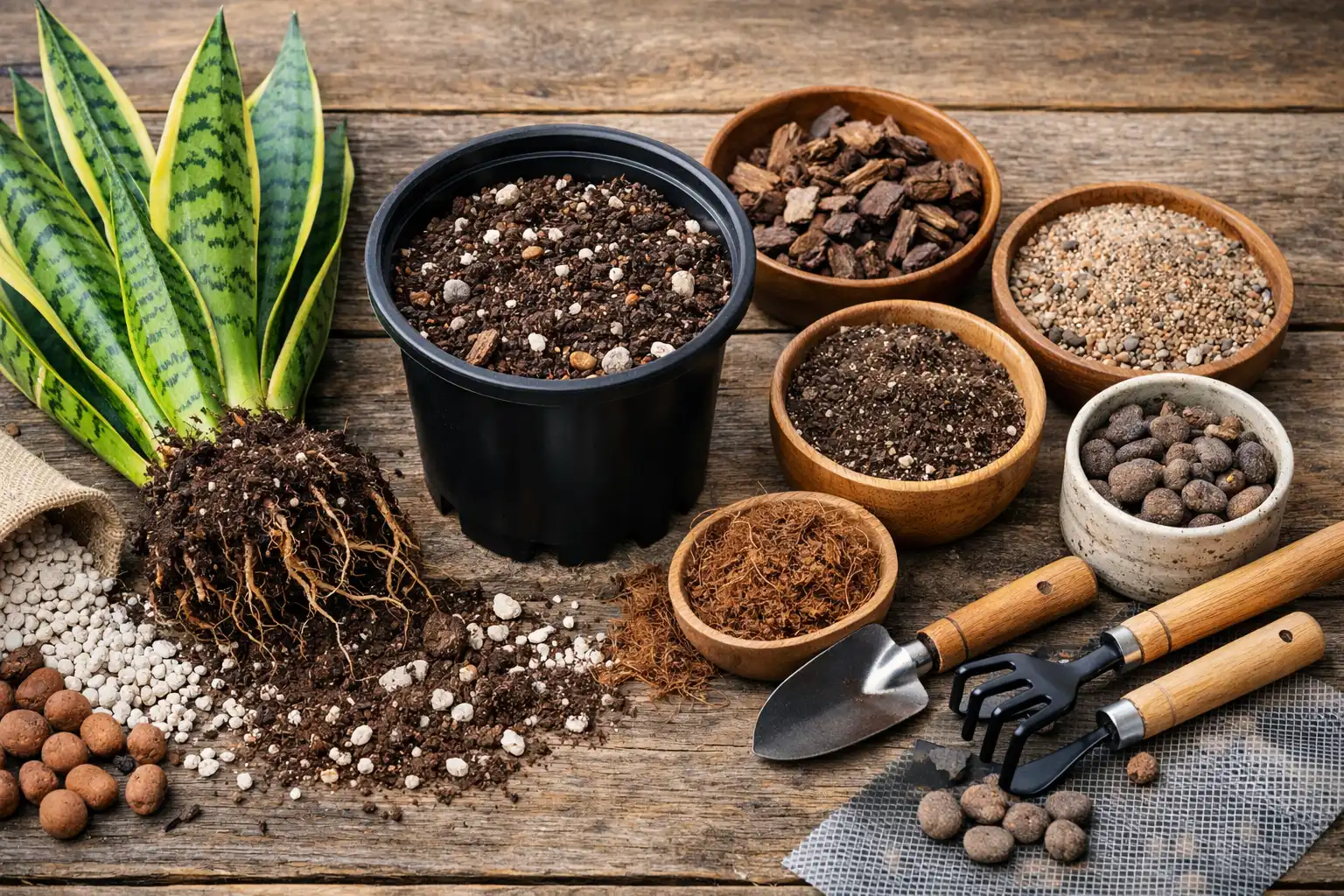
The best type of soil for snake plants is a well-draining, airy mix that prevents water from sitting around the roots. A blend of potting soil, perlite, and sand or cactus mix creates the perfect balance of drainage and nutrients. This helps avoid root rot and supports healthy growth.
Introduction
Snake plants are one of the easiest houseplants to grow, but their success depends heavily on the soil you use. Many beginners assume any potting soil works, yet in reality, the wrong soil can quickly damage the plant.
If you have ever noticed yellow leaves, mushy roots, or slow growth, soil is often the hidden issue and may even be linked to overwatered snake plant signs that many beginners overlook. Snake plants store water in their leaves, so they need soil that dries quickly and allows air to reach the roots.
In this complete guide, you will learn the ideal type of soil for snake plant, how to make the perfect mix, and how to fix common soil-related problems.
What Type of Soil for Snake Plant Works Best
Snake plants naturally grow in dry, rocky regions, which means their roots are not designed to sit in wet soil. The ideal soil must mimic these natural conditions for healthy indoor growth.
The best soil is loose, well-draining, and slightly sandy. It should allow water to flow through quickly while still holding a small amount of moisture for nutrients. Heavy or compact soil traps water and leads to root rot, which is the most common problem with snake plants and often requires proper root rot treatment if not corrected early.
From experience, plants grown in airy soil mixes grow faster, stay upright, and develop stronger roots compared to those in dense soil.
Key Characteristics of Ideal Snake Plant Soil
Drainage is the Most Important Factor
Good drainage ensures that excess water leaves the pot quickly. Snake plant roots cannot tolerate sitting in water, even for a short time.
If the soil stays wet for too long, roots begin to rot and the plant will show signs like yellowing leaves and soft stems. Adding materials like perlite or sand helps create gaps in the soil so water can pass through easily.
In real cases, improving drainage alone can revive a struggling snake plant within weeks.
Soil Texture Should Be Light and Airy
The texture of the soil should feel loose and crumbly, not sticky or dense. This allows oxygen to reach the roots, which is essential for healthy growth.
Compact soil blocks airflow and makes it harder for roots to expand. Over time, this leads to weak growth and poor plant health.
A chunky mix with visible particles like bark or perlite is ideal because it creates natural air pockets.
Balanced Moisture Retention
While drainage is critical, the soil should still hold a small amount of moisture. Completely dry soil can deprive the plant of nutrients.
The goal is balance. The soil should dry out between watering but not become completely lifeless. Organic materials like coco coir or compost help retain just enough moisture without causing sogginess.
Slightly Acidic to Neutral pH
Snake plants prefer soil with a pH between 5.5 and 7.5. This range allows proper nutrient absorption and supports root health.
Most commercial potting mixes already fall within this range, so you usually do not need to adjust it unless using garden soil.
Best Soil Mix for Snake Plant Indoors
Choosing the right soil mix is essential for indoor environments where airflow and evaporation are limited. Indoor plants need extra drainage support to avoid moisture buildup.
Ready Made Soil Options
The easiest option is to use a cactus or succulent mix. These mixes are specifically designed for plants that require fast drainage and low moisture retention.
They contain materials like sand, perlite, and bark that help keep the soil loose and breathable, similar to what is recommended in a detailed snake plant soil guide for optimal drainage. For beginners, this is the safest and most reliable choice.
Modified Potting Soil Mix
If you already have regular potting soil, you can improve it instead of buying a new mix. Combine equal parts of potting soil and drainage materials.
A simple formula is 50 percent potting soil and 50 percent perlite or coarse sand. This transforms heavy soil into a well-draining mix suitable for snake plants.
From experience, this method works just as well as store-bought mixes when done correctly.
DIY Snake Plant Soil Mix Recipe Step by Step
Creating your own soil mix gives you full control over texture, drainage, and nutrients. It is also cost-effective and customizable based on your environment.
Step 1 Choose Your Base Material
Start with a standard indoor potting mix or coco coir. This provides nutrients and some moisture retention.
Avoid garden soil because it is too dense and may contain pests or bacteria.
Step 2 Add Drainage Materials
Mix in perlite, pumice, or coarse sand. These materials improve drainage and prevent soil compaction.
A good ratio is two parts potting soil and one part perlite or sand. For even better drainage, you can increase the amount of inorganic material.
Step 3 Add Organic Matter
Include small amounts of compost or worm castings to provide nutrients. This supports long-term plant health without making the soil too heavy.
Be careful not to add too much, as excessive organic matter can hold too much moisture.
Step 4 Mix Thoroughly
Combine all ingredients evenly to ensure consistent texture. The final mix should feel light, gritty, and well-aerated.
When you water it, the water should drain quickly without pooling on the surface.
Best Soil Components Explained
Perlite and Pumice
Perlite and pumice are lightweight volcanic materials that improve aeration and drainage. They create air pockets in the soil and prevent compaction over time.
Perlite is more commonly available, while pumice is heavier and stays evenly distributed in the soil.
Sand and Gravel
Coarse sand adds weight and improves drainage. It also helps stabilize taller snake plants by making the soil slightly heavier.
Avoid fine sand, as it can compact and reduce airflow instead of improving it.
Coco Coir or Peat Moss
These materials help retain moisture and provide a base for the soil mix. Coco coir is more sustainable and does not compact as easily as peat moss.
They should always be balanced with drainage materials to avoid soggy soil.
Bark and Wood Chips
Pine bark or coco chips add structure and airflow to the soil. They mimic the natural environment of snake plants and improve root health.
They also break down slowly, providing long-term benefits to the soil.
Step by Step Guide to Repotting with the Right Soil
Repotting is essential when the soil becomes compacted or depleted. It refreshes nutrients and improves drainage for better growth.
Remove the Plant Carefully
Gently take the snake plant out of its pot without damaging the roots. If the plant is stuck, loosen the edges of the soil first.
Handling the roots carefully reduces stress and prevents damage.
Clean and Inspect the Roots
Remove old soil and check for any damaged or rotting roots. Healthy roots should be firm and light in color.
Trim any mushy or black roots using clean scissors to prevent further issues.
Prepare the New Soil Mix
Fill the new pot halfway with your prepared soil mix. Make sure the pot has drainage holes to allow excess water to escape.
This step is critical for preventing water buildup.
Replant and Settle the Soil
Place the plant in the center and fill the remaining space with soil. Press lightly to secure the plant without compacting the soil too much.
Water lightly after a few days to allow the plant to adjust, and follow a proper repotting snake plants guide to ensure the roots settle correctly in the new soil.
Common Soil Mistakes to Avoid
Using Regular Garden Soil
Garden soil is too dense for indoor plants and does not drain well. It can also introduce pests and diseases into your home.
Always use a controlled potting mix instead.
Overusing Organic Matter
Too much compost or peat makes the soil retain excess moisture. This increases the risk of root rot and fungal problems.
Balance is key when adding organic materials.
Ignoring Drainage Holes
Even the best soil will fail if the pot does not have drainage holes. Water needs a way to escape, otherwise it will collect at the bottom.
From experience, this is one of the most common beginner mistakes.
Troubleshooting Soil Related Problems
Yellow Leaves and Mushy Roots
This usually indicates overwatering or poor drainage, which often relates to how often to water snake plant practices that need adjustment. The soil is holding too much moisture, causing root rot.
The solution is to repot the plant in a well-draining mix and reduce watering frequency.
Dry and Wrinkled Leaves
This can happen when the soil dries out completely for too long. While snake plants tolerate drought, extreme dryness can stress the plant.
Water the plant thoroughly and ensure the soil retains minimal moisture while understanding how much water snake plant needs for balanced growth.
Slow Growth
Poor soil quality or lack of nutrients can slow down growth. Old soil may lose its ability to support the plant.
Repotting with fresh soil often restores healthy growth.
Benefits of Using the Right Soil Mix
Using the correct type of soil for snake plants offers several advantages that improve both plant health and maintenance.
- Prevents root rot and overwatering issues
- Promotes strong root development
- Improves airflow and nutrient absorption
- Supports faster and healthier growth
- Reduces maintenance and watering frequency
From real experience, plants in proper soil require less attention and recover faster from stress.
Quick Checklist for Perfect Snake Plant Soil
- Use well-draining soil mix
- Add perlite or sand for airflow
- Avoid heavy or compact soil
- Ensure pot has drainage holes
- Water only when soil is dry
- Repot every 2 to 3 years
FAQs About Type of Soil for Snake Plant
What type of soil for snake plant is best for beginners
The best option is a cactus or succulent soil mix because it is already designed for drainage. It requires no mixing and reduces the risk of overwatering issues. This makes it perfect for beginners.
Can I use regular potting soil for snake plants
Yes, but only if you modify it by adding perlite or sand. Regular soil alone holds too much moisture and can lead to root rot. Always improve drainage before using it.
How often should I change snake plant soil
Snake plants should be repotted every 2 to 3 years. Over time, soil loses nutrients and becomes compact. Fresh soil helps maintain healthy growth and root function.
Do snake plants need sandy soil
They prefer slightly sandy soil because it improves drainage. However, pure sand is not suitable. A balanced mix with organic material and drainage components works best.
Can I grow snake plant in water instead of soil
Yes, snake plants can grow in water, but it requires careful maintenance. Soil is generally better because it provides nutrients and stability for long-term growth.
Conclusion
Choosing the right type of soil for snake plant is the most important step in ensuring long-term health and growth. A well-draining, airy mix with balanced moisture prevents root rot and keeps your plant thriving.
Whether you use a ready-made mix or create your own, the goal is always the same. Keep the soil light, breathable, and fast-draining. This simple adjustment can transform your plant’s health dramatically.
In the end, the perfect type of soil for a snake plant is not complicated. It is all about balance, drainage, and understanding how your plant naturally grows.